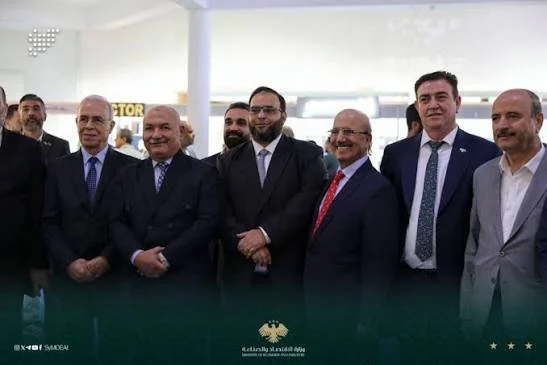
President Ahmad al-Sharaa issued Decree No. 189 of 2026 on 20 October 2026, marking a formal restructuring of economic ministries in Syria. The decree initiates administrative changes across the government, impacting key sectors managed by the Syrian Petroleum Company, the Syrian Sovereign Fund, and various state entities. Officials in Damascus began implementing the provisions of the decree immediately following its announcement. These structural adjustments aim to reorganize ministerial oversight and consolidate management protocols for state assets. The administration of President Ahmad al-Sharaa has designated specific protocols for the transition of leadership within the affected departments. Future reports are expected to detail the appointments resulting from this mandate.
Reversing Previous Economic Consolidation
Decree No. 189 of 2026 reverses the consolidation of economic portfolios that the government originally introduced in March 2025. By separating functions previously merged under a unified administrative structure, the new mandate seeks to return to a decentralized ministerial arrangement for financial oversight.
Economist Yassin al-Ali noted the potential impact of these revisions on administrative efficiency. "The change could be constructive if accompanied by a precise division of authority and unified policy channels," Yassin al-Ali stated. This shift aims to adjust the management protocols that have governed state economic entities since the 2025 consolidation. Officials have begun the process of decoupling the portfolios, moving away from the centralized framework that defined the previous year of economic governance in Syria.
New Appointments to Economic Posts
Decree No. 190 of 2026 named Maher Khalil al-Hassan as the new chief executive of the Syrian Petroleum Company. This appointment, issued on 20 October 2026, functions as part of the broader administrative shift occurring within state-managed entities.
Omar Samer al-Halabi received an appointment through Decree No. 191 of 2026. He now serves as an economic affairs adviser to the presidency and holds the position of chairman of the Syrian Sovereign Fund's board of directors. These leadership transitions follow the government's decision to decentralize ministerial oversight.
Basel Abdulaziz Abdul Hannan assumed the role of Minister of Industry, Domestic Trade and Consumer Protection. His appointment places him at the center of the reorganized ministerial structure. Political and economic researcher Basel Koueifi expressed caution regarding the potential consequences of these organizational changes. "The separation could simply shift administrative complications from within a single ministry to the relationship between two independent bodies," Basel Koueifi stated.
These administrative updates occur against a backdrop of previous economic performance data. A World Bank assessment from July 2025 estimated that Syria's GDP contracted by 1.5 percent in 2024. The same report from the World Bank provided a projection for the following year, anticipating modest growth of around 1 percent for Syria in 2025. The government is currently working to integrate the new leadership appointments into the existing framework of state economic governance. Officials in Damascus are managing the transition of these portfolios as they move away from the centralized administrative structure that was in place prior to the latest decrees.