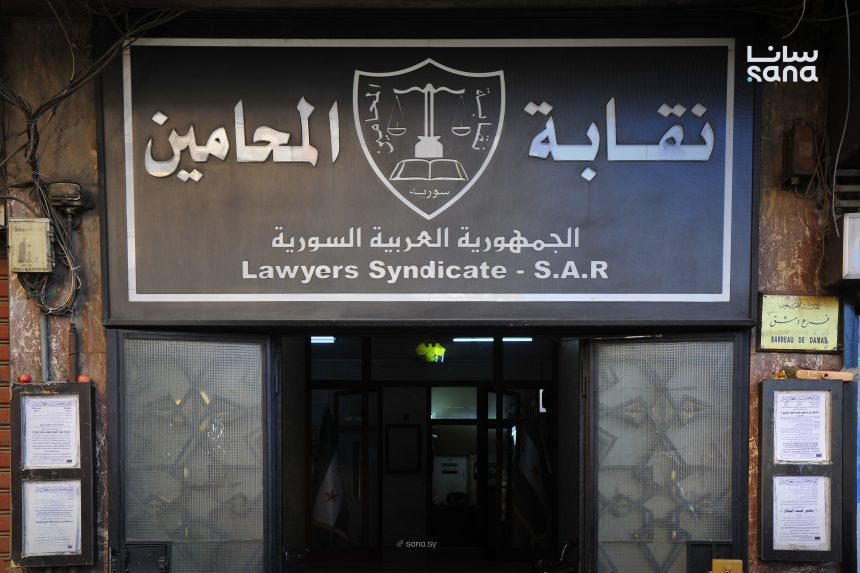
The Syrian Lawyers Syndicate affirmed on Saturday that the presence of a lawyer for the accused in criminal cases constitutes a fundamental legal guarantee. The syndicate stated that any trial conducted without counsel before the Criminal Court is considered incomplete and subject to nullification. This statement coincides with the appearance of Atif Najib before the Fourth Criminal Court at the Palace of Justice in Damascus. The Syrian Lawyers Syndicate emphasized, "The Syrian Lawyers Syndicate affirmed that the presence of a lawyer for the accused in criminal cases is a fundamental legal guarantee, emphasizing that a trial without a lawyer before the Criminal Court is considered incomplete and subject to nullification." This key legal principle shows the judiciary's commitment to due process and fair trials.
Syndicate Clarifies Lawyer's Role
The Syrian Lawyers Syndicate clarified that a trial conducted without a lawyer present before the Criminal Court is deemed incomplete and subject to nullification. This shows the legal requirement for counsel in criminal proceedings, ensuring that defendants receive proper representation. The Syndicate also outlined the specific duties of defense attorneys, emphasizing the boundaries of their role. "The task of the assigned lawyer is limited to ensuring the rights of defense and legal procedures, not adopting the accused's actions," the Syrian Lawyers Syndicate stated. This definition aims to distinguish the lawyer's role as a guarantor of due process from an endorsement of the defendant's alleged conduct, focusing instead on upholding procedural integrity throughout the judicial process.
Ensuring Procedural Justice
The Syrian Lawyers Syndicate clarified in a statement received by SANA on Thursday that the presence of legal counsel, whether a chosen representative or a court-assigned attorney, does not signify an endorsement or justification of the alleged crime. Instead, the Syndicate stated that the lawyer's role is to safeguard the judicial ruling from potential appeal and to ensure that it is issued through correct legal procedures. "The presence of the lawyer, whether a chosen representative or one assigned by the court, does not mean defending the crime or justifying it, but rather aims to protect the judicial ruling from appeal and ensure it is issued with correct procedures," the Syrian Lawyers Syndicate affirmed. This clarification shows the procedural focus of legal representation in criminal proceedings, noting that the lawyer's primary responsibility is to ensure that all legal formalities are observed and that the defendant's rights are protected at every stage of the trial.
Context of Recent Trials
The first sessions of public trials for symbols of the defunct regime commenced last Sunday. These legal proceedings are part of ongoing efforts within the judicial system to address past actions. The trial involving Atif Najib, held at the Fourth Criminal Court at the Palace of Justice in Damascus, has been closely observed by legal professionals and the public alike. Atif Najib appeared before the Fourth Criminal Court in the Palace of Justice in Damascus, marking a significant step in these judicial processes. The court subsequently adjourned the trial to Sunday, May 10th, for its second session, allowing time for further preparation and legal considerations. This adjournment is a standard procedural step in complex criminal cases, providing continuity for the proceedings.
Legal Guarantees Affirmed
The Syrian Lawyers Syndicate emphasized the foundation of a just legal system, stating that true justice relies on sound procedures rather than punitive reactions. "True justice is not built on reaction, but on sound procedures that ensure criminals do not escape punishment," the Syrian Lawyers Syndicate affirmed. This perspective shows the importance of due process in criminal proceedings, ensuring that all legal steps are meticulously followed to uphold the integrity of the justice system. The Syndicate's consistent message reinforces the necessity of legal representation as a cornerstone of fair and equitable judicial outcomes, protecting both the accused's rights and the legitimacy of court decisions.