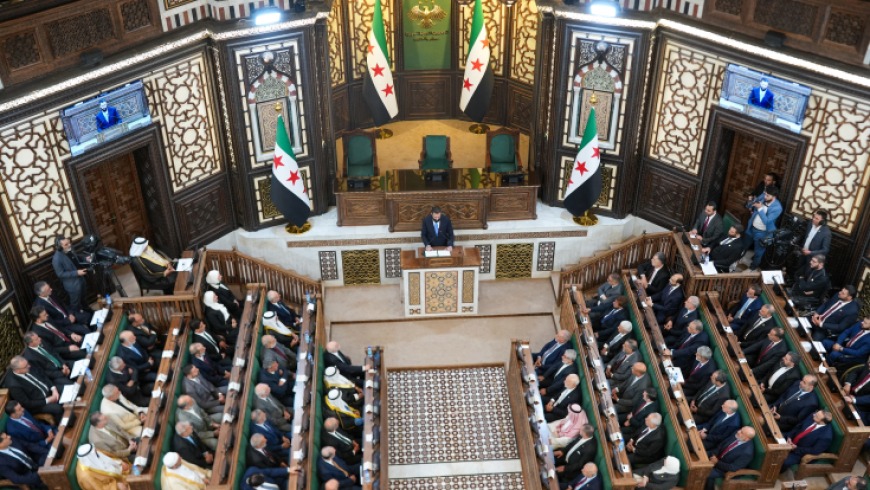
The Syrian People’s Assembly approved the repeal of Law No. 521 of 1955, which previously granted the Minister of Education authority to expropriate land for educational facilities. Lawmakers also unanimously repealed Law No. 143 of 1958, a measure that empowered the Minister of Education to seize private property for ministry missions. This latter repeal passed with a 95.77 percent majority during the opening session of the assembly’s first regular legislative term. Abdul Nasser Houshan, Chairman of the Constitutional and Legislative Affairs Committee, stated that "the assembly’s current priority is to review and abolish laws that have long imposed unjust burdens on large segments of society." He added that "the repeal aims to end employment discrimination and restore social equity," citing violations of the Constitutional Declaration’s prohibition on discrimination.
Abolishing Property Expropriation Laws
The Constitutional Committee recommended retaining the Border Lands Law in Syria. Committee members cited national security concerns as the primary reason for keeping the existing regulations in place. Officials within the body suggested that while the fundamental law remains, the government should implement eased regulatory procedures for property transactions. These adjustments aim to simplify the legal process for citizens seeking to buy or sell land in restricted areas. Members of the committee indicated that these changes seek to balance state defense requirements with the rights of property owners. The proposed shift reflects an attempt to streamline administrative requirements within the current legal framework while maintaining the restrictions deemed necessary for border protection.
Reforming Public Sector Employment
A draft law currently under review seeks to repeal a 2014 statute that reserved 50 percent of public sector job vacancies for families of deceased members of the National Defence Forces and affiliated militias. This legislative effort represents a shift in how the government manages state employment quotas and recruitment priorities. Abdul Nasser Houshan, Chairman of the Constitutional and Legislative Affairs Committee, addressed the legislative agenda by stating, "the assembly has received three draft laws referred by the President of the Republic, in addition to a legislative proposal submitted by several members of parliament."
Separate from the recruitment reforms, the assembly is evaluating proposed amendments to Article 364 of the General Penal Code. These changes would adjust the sentencing guidelines for public employees who commit unauthorized absences from their posts. Current regulations mandate a penalty range of six months to three years in prison for such infractions. The proposed amendment would reduce this punishment to a term of three months to one year in prison. Lawmakers intend for these adjustments to modify the existing penal framework governing civil service conduct and employee attendance.