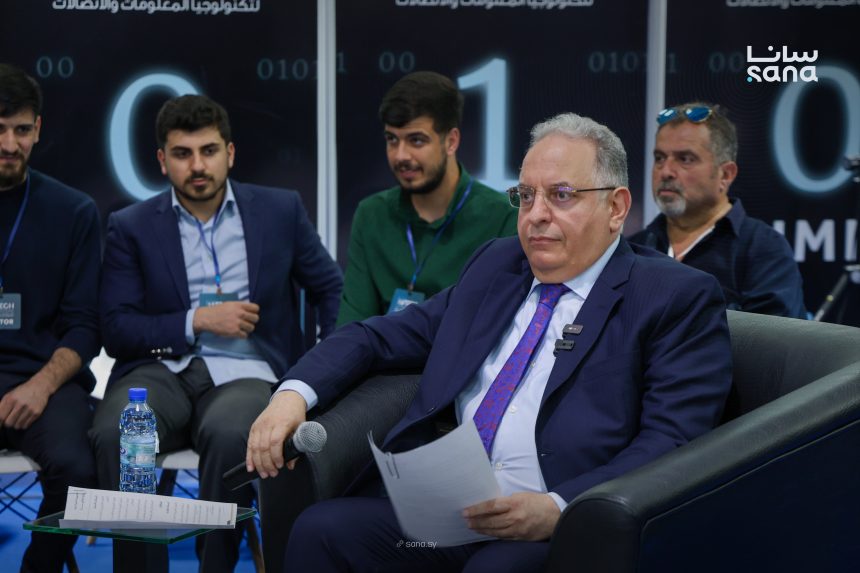
Syria's Ministry of Finance is prioritizing digital transformation as a core component of its economic strategy, with Minister Muhammad Yasser Bernia emphasizing its critical role in national development. Bernia stated that digital transformation in Syria is no longer an option or a luxury, but an urgent necessity for full economic development within the country. This declaration shows the government's commitment to leveraging technology for national progress and economic resilience.
The minister further indicated that digital transformation serves as a fundamental tool for improving the quality of government services. He added that the initiative aims to enhance transparency and reduce corruption across various sectors. This strategic shift is expected to streamline administrative processes and foster a more accountable public sector. Bernia elaborated that the full economic development sought through digital transformation is essential for Syria's future prosperity, touching upon all aspects of national life and economic activity. The emphasis on digital solutions reflects a forward-looking approach to governance and public administration.
Government-Wide Digital Push
Digital transformation is identified as a common denominator within the strategies of various ministries and government institutions across Syria. This unified approach ensures that modernization efforts are coordinated and full, rather than fragmented. The initiative extends beyond individual departments, aiming for a unified approach to modernization across the entire governmental apparatus. Officials assert that this full digital push is designed to create new job opportunities within the country, fostering a skilled workforce capable of navigating the digital economy. The government's strategy focuses on building greater trust in the national economy through these digital advancements, reassuring citizens and investors alike of the stability and efficiency of state operations. The integration of digital processes is intended to streamline operations and enhance efficiency across the public sector, contributing to broader economic stability. This government-wide commitment to digital transformation is seen as a key step towards modernizing the state's infrastructure and improving its interaction with citizens and businesses. The goal is to establish a strong digital ecosystem that supports sustainable growth and development across all sectors.
Ministry of Finance Initiatives
The Ministry of Finance is placing digital transformation at the core of its strategy by digitizing financial services and simplifying procedures for citizens. This approach aims to enhance accessibility and efficiency for the public, making financial transactions and interactions with the ministry more straightforward and less time-consuming. Officials within the ministry assert that the digitization of services directly contributes to mitigating corruption and bribery, while also reducing the influence of intermediaries in financial transactions. By creating direct digital channels, the ministry seeks to eliminate opportunities for illicit activities and ensure greater accountability. This strategic move is also intended to limit the role of intermediaries, ensuring that citizens can directly access services without unnecessary third-party involvement, thereby increasing transparency and reducing costs. The ministry's efforts are part of a broader national push to modernize public services and improve the overall economic environment.
Last year, the Ministry of Finance developed an electronic "Budget Platform." This platform was created with a specific focus on local talent, showcasing a commitment to nurturing domestic capabilities. Instead of engaging large companies, the ministry relied on the expertise of university graduates and recent graduates for its development, aiming to foster domestic capabilities within the digital sector. This initiative not only provided valuable experience for young Syrian professionals but also demonstrated the potential for local innovation in critical government projects. The success of the "Budget Platform" serves as a model for future digital projects within the ministry and across other government institutions, noting the effectiveness of empowering local talent.
Syria High Tech Exhibition
The 12th edition of the "Syria High Tech" exhibition for information and communication technology commenced on April 28th, marking a significant event for the country's technology sector. The Arab Group for Exhibitions and Conferences and Al-Mubde'oon for Exhibitions and Conferences are organizing the event, bringing together key players in the ICT industry. The Ministry of Communications and Information Technology sponsors the exhibition, showing the government's support for technological advancement and innovation. The exhibition takes place at the exhibition city in Damascus, a central venue for such large-scale events. The "Syria High Tech" exhibition is scheduled to continue until May 1st, providing several days for attendees to explore the latest technological trends and products.
A total of 150 companies are participating in the exhibition, representing 345 brands, showcasing a diverse range of products and services. These companies originate from 45 different Arab and foreign countries, reflecting the international interest and participation in Syria's technology market. The wide international representation notes the exhibition's role as a platform for global technology exchange and collaboration. The participating entities are distributed across approximately 136 pavilions within the exhibition venue, offering ample space for demonstrations, networking, and business discussions. The exhibition serves as a key platform for technology companies to present their innovations, attract investments, and explore new partnerships, contributing to the growth and modernization of Syria's digital infrastructure. It also provides an opportunity for Syrian businesses and consumers to engage with advanced technologies from around the world.