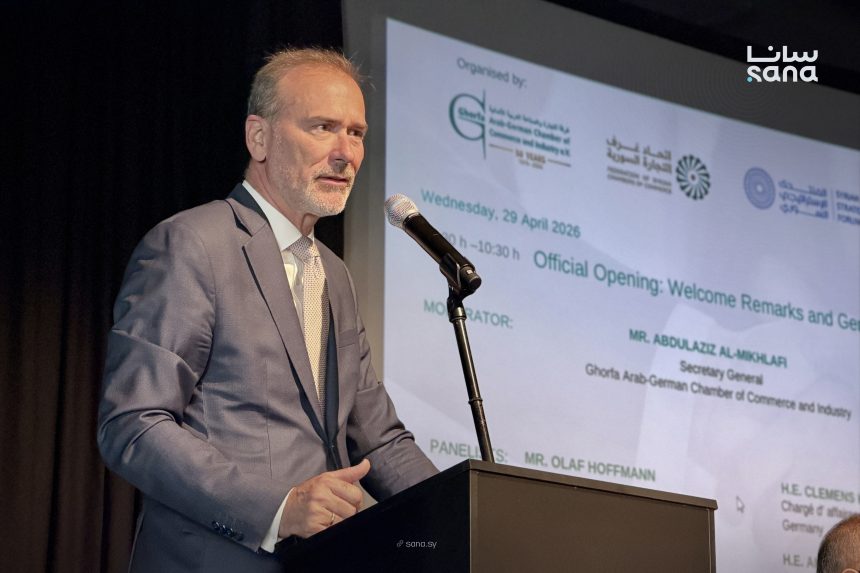
The Syrian-German Economic Cooperation Prospects Forum commenced on Wednesday in Berlin, bringing together key officials to discuss potential economic and trade cooperation between Syria and Germany. Minister of Economy and Industry Nidal Al-Shaar, Governor of the Central Bank of Syria Abdul Qadir Hureya, and Chargé d'affaires of the Syrian Embassy in Berlin Mohammed Barrak Shukri were among the attendees. The forum aims to foster an exchange of views on the development prospects for economic collaboration. The conference demonstrated that the German economy is "opening up towards Syria," according to Hach.
Forum's Success and Syrian Presentation
Clemens Hach, Director of the Middle East and North Africa Department at the German Foreign Ministry, described the Syrian-German Economic Cooperation Prospects Forum as "very successful." Hach emphasized that the Berlin event served as a direct follow-up to President Ahmed Al-Shar's earlier visit to the German capital. During the forum, Minister Nidal Al-Shaar and Governor Abdul Qadir Hureya delivered a "convincing overview" of the economic development prospects within Syria, according to Hach. Their presentation focused on potential areas for future collaboration.
Facilitating Investment and Trade
Clemens Hach stated that Syrian officials informed German companies about the Syrian government's efforts to facilitate investments and trade. Hach emphasized the "great importance" of Governor Abdul Qadir Hureya's visit to the German Federal Bank in Frankfurt. This engagement notes a potential path for future financial cooperation between the two nations. Hach also confirmed that Syrian-German trade relations possess broad potential. The discussions in Berlin and Frankfurt aim to explore and expand these opportunities for economic collaboration.
Syria's Strategic Position
Clemens Hach, Director of the Middle East and North Africa Department at the German Foreign Ministry, noted Syria's geographical significance. Hach stated that Syria functions as a key link connecting the Arab world with Europe. This positioning shows the nation's potential role in facilitating broader regional economic and trade interactions. The assessment suggests that Syria's location could be a factor in developing future cooperation initiatives between the two regions.
Acknowledging Existing Challenges
Clemens Hach of the German Foreign Ministry acknowledged that challenges persist despite the positive discussions. Hach specifically noted that obstacles remain, particularly within the financial sector. This recognition suggests a realistic approach to developing future economic ties between Syria and Germany. The discussions in Berlin aimed to address these existing hurdles while exploring avenues for increased cooperation. German officials are reportedly keen to work through these issues to unlock the potential of Syrian-German trade relations.
Future Prospects and Potential
The recent discussions in Berlin and Frankfurt have laid the groundwork for potential future collaborations between Germany and Syria. German firms received information about the Syrian government's efforts to facilitate investments and trade within the country. Clemens Hach, Director of the Middle East and North Africa Department at the German Foreign Ministry, emphasized the broad potential of Syrian-German trade relations that could be further explored. Governor Abdul Qadir Hureya's visit to the German Federal Bank in Frankfurt noted a significant step toward future financial cooperation. Despite acknowledged challenges, particularly in the financial sector, the dialogue indicates a willingness to address these hurdles. Syria's strategic geographical position, connecting the Arab world with Europe, was also noted as a factor that could facilitate broader regional economic interactions. Officials from both sides appear committed to developing these opportunities.