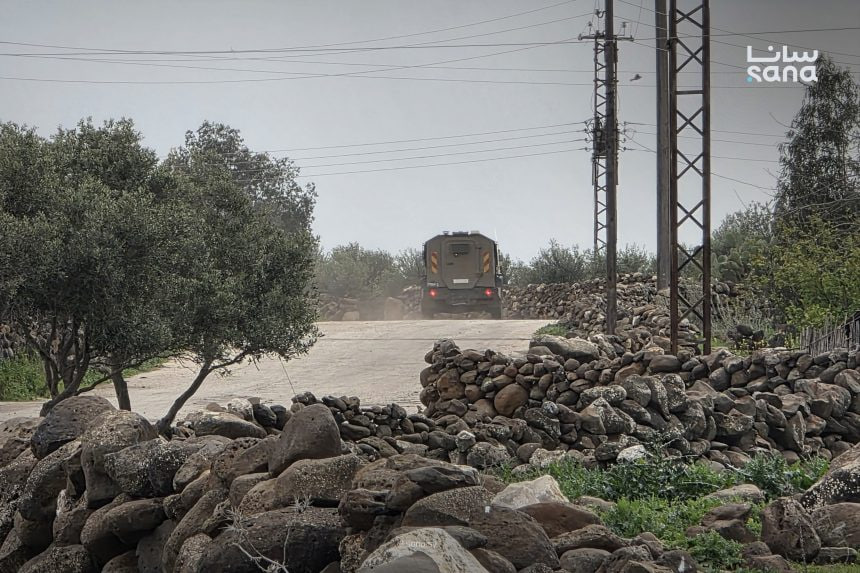
Israeli forces conducted a brief incursion into the outskirts of Jamilah town in the Yarmouk Basin area, western Daraa countryside, on Thursday evening. The incursion involved Israeli occupation forces entering the Syrian town for a short distance before subsequently withdrawing, according to reports from the region. This operation marked the latest military movement by Israeli forces in the southern Syrian territories. The presence of occupation forces within the town's outskirts caused significant panic among residents in Jamilah, who witnessed the military activity firsthand. In addition to the incursion into Jamilah, military movements by Israeli occupation forces were also observed in the vicinity of the border area, further adding to local concerns and noting heightened tensions in the region. These observations suggest a continued pattern of military presence and activity along the border.
Pattern of Aggression
This recent event follows a similar pattern of military actions in the area. On April 28, an Israeli occupation force consisting of approximately 20 vehicles entered the village of Ma'riya, which is also located in the Yarmouk Basin area of the western Daraa countryside. During that previous incursion, Israeli forces patrolled the streets of Ma'riya, demonstrating their presence within the village. Their movements were reportedly accompanied by drone surveillance operating overhead, providing aerial observation of the ground operations. Following their patrol through the village, the Israeli forces subsequently withdrew from Ma'riya, completing their operation in a manner similar to the recent Jamilah incursion. Both incidents show a recurring pattern of Israeli military presence and withdrawal in these Syrian territories.
Syrian Response and Demands
Syria has consistently demanded the immediate withdrawal of Israeli occupation forces from its territories, reiterating this call on numerous occasions. The Syrian government maintains that all measures taken by Israel in southern Syria are void and consequently have no legal effect under international law. This firm stance reinforces Syria's unwavering position regarding the sovereignty and territorial integrity of its land, asserting that any Israeli actions are illegitimate.
Damascus has also called on the international community to assume its responsibilities in addressing the situation, urging a proactive response to these repeated incursions. Syrian authorities specifically urge the international community to deter what they describe as the occupation's practices and to compel a full withdrawal of Israeli forces from southern Syria. This appeal aims to garner broader international support for Syria's territorial integrity and to pressure Israel to cease its military operations within Syrian borders, emphasizing the need for adherence to international legal norms.
Regional Context and Implications
Israel continues its aggressions and violations of the 1974 Disengagement of Forces Agreement by entering southern Syria, according to various reports. These actions, which include incursions into towns and villages, involve attacking citizens through raids, arrests, and land bulldozing. The 1974 agreement established a demilitarized zone and outlined the conditions for military forces in the Golan Heights following the 1973 Yom Kippur War, setting clear boundaries for military presence. Syria views Israeli military presence and activities in its southern territories as direct breaches of this international accord, undermining regional stability. Such incursions and operations are seen by Damascus as part of a broader pattern of aggression that disregards international law and agreements. The Syrian government has repeatedly called for the full withdrawal of Israeli forces, emphasizing the critical need for international intervention to uphold Syria's sovereignty and territorial integrity against these reported violations and to ensure the cessation of such military activities.