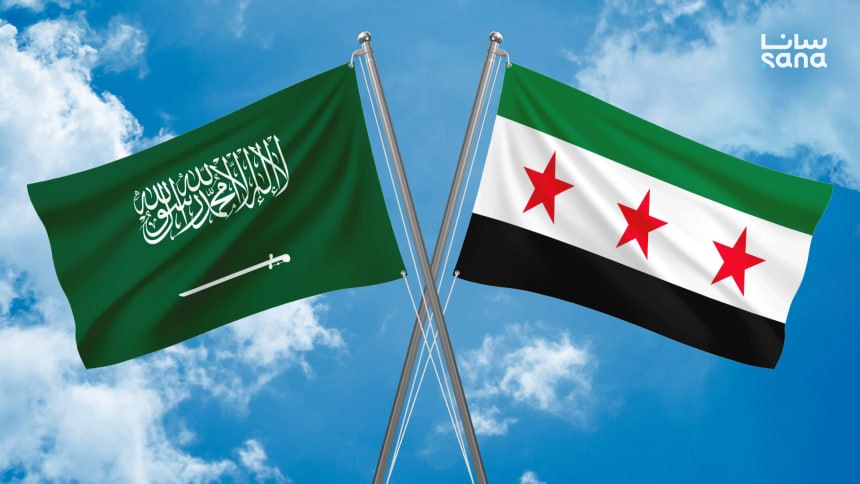
Syria and Saudi Arabia are expanding their strategic partnership, focusing increasingly on economic recovery, reconstruction, and investment since Syria’s liberation on December 8, 2024. This burgeoning relationship is being meticulously cultivated through high-level diplomatic engagements and substantial financial and economic commitments. Syrian President Ahmad al-Sharaa and Saudi Crown Prince and Prime Minister Mohammed bin Salman have engaged in multiple high-level meetings to cement this relationship, which President al-Sharaa described as "the beginning of a strategic relationship." During these key discussions, the talks were characterized as laying the foundation for this strategic relationship, designed to span political, security, economic, cultural, and service sectors, showing a full approach to bilateral cooperation.
President al-Sharaa and Mohammed bin Salman met in Riyadh in February 2025, marking a key moment in the renewed diplomatic ties. This initial encounter was followed by a meeting in Doha in September of the same year, demonstrating a sustained commitment to dialogue. Their engagement continued with another meeting in Riyadh on October 29, held on the sidelines of the Future Investment Initiative conference, a significant global economic platform. In January 2026, the two leaders further discussed strengthening cooperation in economic development and investment, signaling an acceleration of their joint economic agenda. A subsequent meeting in Jeddah on April 21, 2026, specifically focused on expanding economic and investment partnerships, alongside exploring regional connectivity projects, noting a broader vision for shared prosperity. Their most recent encounter in Riyadh on October 6 reaffirmed the established course of cooperation and explored further avenues to advance bilateral relations and shared interests, showcasing an ongoing and dynamic partnership. These frequent high-level engagements show the strategic importance both nations attach to this revitalized relationship and their shared objectives for regional stability and economic growth.
Foundational Steps and Financial Support
In April 2025, Saudi Arabia and Qatar jointly settled Syria's outstanding arrears to the World Bank, amounting to approximately $15 million. This financial intervention marked a significant step in re-engaging Syria with international financial institutions. The payment specifically allowed the World Bank to reinstate its support and activities within Syria, which had been suspended for more than 14 years. This re-engagement is key for Syria's economic rehabilitation efforts, providing access to development programs and funding that were previously unavailable. The reinstatement of World Bank activities is expected to facilitate critical infrastructure projects, human development initiatives, and technical assistance, all vital components for a sustainable recovery.
Saudi Foreign Minister Prince Faisal bin Farhan stated in May 2025 that the Kingdom was actively coordinating with Washington regarding measures related to lifting sanctions on Syria. Prince Faisal also affirmed that Saudi Arabia intended to be among the leading supporters of Syria's economic recovery. This commitment signals Saudi Arabia's intent to play a central role in facilitating the broader international re-integration and economic stabilization of Syria. The coordination with the United States on sanctions relief is viewed as a key component of this strategy, aiming to remove obstacles to investment and trade, thereby creating a more conducive environment for economic growth and international partnerships. This diplomatic effort notes Saudi Arabia's role as a key regional mediator and advocate for Syria's economic rehabilitation on the global stage.
Further solidifying economic ties, the Syrian side of the Syrian-Saudi Business Council was formally established in February 2026. The formation of this council is designed to foster direct commercial engagement and facilitate private sector collaboration between the two nations. It provides a structured platform for businesses from both countries to explore investment opportunities, establish partnerships, and address challenges in bilateral trade. This initiative is expected to drive economic activity and contribute to the overarching goal of economic revival in Syria, supported by Saudi capital and expertise. The council's role is critical in identifying specific sectors for investment, streamlining regulatory processes, and building trust between the business communities, thereby translating high-level agreements into tangible economic projects.
Economic Forum and Investment Pacts
At the Syrian-Saudi Investment Forum held in Damascus in July 2025, Syrian and Saudi representatives finalized 47 agreements and memorandums of understanding, collectively valued at over $6 billion. The agreements spanned critical sectors including energy, tourism, industry, trade, real estate, and cybersecurity. These investment pacts are projected to generate approximately 50,000 direct jobs and an additional 150,000 indirect jobs across Syria, providing a significant boost to employment and economic activity. The substantial value and broad scope of these deals show the depth of commitment from both sides to Syria's economic revitalization.
The forum itself was a significant gathering, bringing together more than 20 Saudi government entities. Alongside these official bodies, around 100 major private-sector companies from Saudi Arabia participated, signaling a broad and deep commitment from the Kingdom's business community towards Syrian economic reconstruction. The scale of participation from both government and private sectors showed the strategic importance attached to these economic initiatives by both nations. The diverse range of sectors covered by the agreements reflects a full approach to stimulating economic revival and fostering long-term growth within Syria. This multi-sectoral engagement aims to rebuild and modernize various segments of the Syrian economy, from foundational industries to emerging technological fields like cybersecurity, and to capitalize on opportunities in real estate and tourism development. The active involvement of numerous Saudi businesses indicates a strong market confidence in Syria's future economic prospects under the framework of this strategic partnership.
Further solidifying the burgeoning economic ties, the Saudi Ministry of Investment established and opened an office in Damascus in August 2025. This move provides a direct official presence to facilitate and oversee the implementation of the numerous agreements signed and to explore future investment opportunities. The opening of the office is seen as a practical step to streamline investment processes, provide support to Saudi investors, and ensure continuous engagement between the two countries on economic matters. This permanent presence will serve as a critical liaison, helping to navigate any challenges and ensuring the smooth execution of joint ventures and investment projects. In the same month, August 2025, a Syrian-Saudi agreement was signed specifically to promote and protect investment, offering legal and regulatory assurances to investors and further enhancing the attractiveness of Syria as an investment destination.
Sector-Specific Cooperation and Projects
Syria and Saudi Arabia formalized their collaboration in the energy sector on August 28, signing an agreement and six memorandums of understanding. These accords encompass various areas within energy, including electricity, petroleum, and gas. This full approach to energy cooperation aims to rebuild and modernize Syria's energy infrastructure, ensuring reliable supply and exploring new avenues for energy development. Expanding on this bilateral engagement, the two nations announced strategic contracts in February 2026 across several key sectors. These agreements focus on aviation, telecommunications, infrastructure development, water management, and real estate, demonstrating a holistic strategy for economic rebuilding.
Among the specific initiatives is the Silk Link project, a significant undertaking valued at nearly $1 billion. This project outlines the deployment of approximately 4,500 kilometers of fiber-optic cables, the establishment of five data centers, and the construction of submarine cable landing stations. This digital infrastructure aims to enhance connectivity and data capabilities between the two countries, laying the groundwork for a modern digital economy and improved communication networks across the region. In the realm of transport, cooperation extends to the development of Aleppo International Airport, which includes plans for substantial upgrades to the existing facility. There are discussions and proposals to establish a new Syrian airline, signaling an intent to revitalize the country's air travel capabilities and boost tourism and trade links. These infrastructure projects are vital for reconnecting Syria with regional and international markets, facilitating trade, and supporting the movement of people and goods.
Expert and Official Perspectives
President Ahmad al-Sharaa’s decision to make Saudi Arabia his first foreign destination after taking office in February 2025 signaled the importance Damascus attaches to relations with Riyadh, which he described as "the beginning of a strategic relationship." This initial visit set a strong precedent for the intensified diplomatic and economic engagement that followed. In August 2025, Syria and Saudi Arabia signed an agreement to promote and protect investment, reinforcing the legal framework for their economic partnership. The Saudi crown prince reaffirmed the Kingdom’s unwavering support for Syria’s reconstruction and development in December 2025, reiterating the long-term commitment to this strategic alliance. An agreement signed in August 2026 provided for studies on an integrated water, desalination, and transmission system with a desalination capacity of up to 1.2 million cubic meters a day and a transmission network extending about 400 kilometers. This ambitious water project notes the commitment to addressing fundamental needs and ensuring sustainable development in Syria, further cementing the full nature of the strategic partnership between the two nations. The consistent reaffirmation of support and the initiation of large-scale, long-term projects show the depth and seriousness of this revitalized relationship.