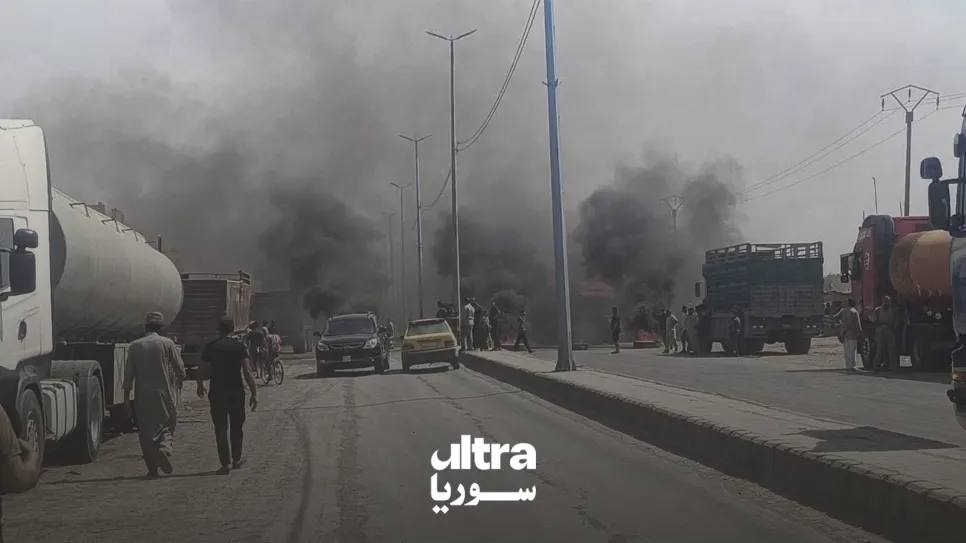
Protests erupted across several Syrian governorates on Sunday following a government decision to increase fuel prices by as much as forty percent. These demonstrations swept through various regions, reflecting widespread public discontent with the new economic measures. Demonstrations were reported in rural areas of Raqqa, Deir ez-Zor, and Hasakah, indicating a broad geographic reach of the public's reaction to the price adjustments. The price of Octane-95 petrol rose significantly to 195 new Syrian pounds per litre, making it a substantial burden for many citizens. Similarly, Octane-90 petrol, a more commonly used grade, increased to 185 pounds per litre, impacting a larger segment of the population. Diesel prices climbed to 175 pounds per litre, a critical increase given its widespread use in transportation, agriculture, and power generation, further impacting daily costs for both individuals and businesses. The cost of essential household goods also saw sharp increases; household gas cylinders now cost 1,600 pounds, directly affecting families reliant on gas for cooking and heating. Industrial gas cylinders, vital for various sectors, reached 2,500 pounds, signaling rising operational costs for industries. Additionally, a tonne of fuel oil, key for large-scale industrial and energy production, saw a significant jump, reaching 52,800 pounds, showing the severity of the energy crisis affecting multiple facets of the Syrian economy. These price hikes are expected to have a cascading effect on the cost of living and business operations across the country.
Extent of Import Reliance
Syria relies heavily on imports to meet its domestic fuel needs, a dependency that exacerbates the impact of global energy market fluctuations and places considerable strain on the national budget. A significant portion of diesel, petrol, and household gas is sourced from abroad, noting the nation's vulnerability in securing essential energy supplies. Approximately 74 per cent of diesel demand, a fundamental fuel for transportation and industry, is met through imports, indicating a substantial reliance on external sources. This figure rises even higher for petrol, with approximately 81 per cent of petrol demand being covered by imports, showing the country's limited domestic capacity to produce this vital transportation fuel. Household-gas consumption is almost entirely dependent on external supplies, with approximately 96 per cent of its demand covered by imports, making it one of the most import-reliant energy commodities in the country. This profound reliance on imports makes the Syrian economy particularly susceptible to international price volatility and geopolitical factors affecting supply chains.
The average daily demand for diesel in Syria stands at roughly 11.9 million litres, a substantial volume required to sustain various economic activities and daily life. Against this considerable demand, domestic production supplies only about 3.09 million litres per day, leaving a significant deficit. Consequently, the nation necessitates the import of nearly 8.81 million litres of diesel daily to bridge this gap and meet essential requirements. For petrol, daily demand averages around 8.1 million litres, reflecting the widespread use of private and public transport. Domestic production covers approximately 1.54 million litres per day, meaning a staggering 6.56 million litres of petrol must be imported each day to keep the country moving. This imbalance between domestic supply and demand places immense pressure on the national economy and foreign currency reserves. Household gas demand is roughly 2.5 million litres per day, illustrating its critical role in daily household activities. However, domestic production covers only about 98,000 litres of this daily demand, making the country overwhelmingly dependent on imports for this essential commodity. The vast disparity between production and consumption across all major fuel types shows the profound energy challenges facing Syria.
Structural Energy Sector Weaknesses
The Ministry of Energy estimates the current cost of securing imported petroleum products and natural gas for Syria at approximately 25.2 million dollars per day. This staggering figure shows the immense financial strain on the nation's energy sector and the broader economy, representing a significant drain on foreign exchange reserves. The high cost of imports is a direct consequence of the country's limited domestic production capabilities and its heavy reliance on external markets for essential energy resources. This daily expenditure notes the critical economic pressure points that necessitate difficult decisions regarding fuel pricing and subsidies. Current crude oil output within Syria is estimated at about 100,000 barrels per day, a modest figure compared to the nation's historical production levels and its energy consumption needs. A significant portion of this domestic production, more than 75 per cent, consists of heavy crude oil. The characteristics of heavy crude often necessitate more complex and energy-intensive refining processes compared to lighter grades, which can further increase production costs and reduce efficiency within the domestic refining infrastructure. This composition of crude oil adds another layer of complexity to the country's energy self-sufficiency efforts.
Despite these inherent structural challenges and the ongoing financial pressures, efforts have been made to bolster domestic production and enhance the energy sector's resilience. During the first half of 2026, a concerted drive saw 152 wells returned to operation, aiming to maximize output from existing infrastructure. This initiative involved significant investment and technical work to reactivate dormant or underperforming wells. Additionally, ten new wells entered production in the same period, contributing fresh output to the overall capacity. These efforts, while significant, still fall short of bridging the substantial gap between domestic supply and the nation's burgeoning demand for energy, particularly given the high cost and logistical complexities associated with importing such large volumes of fuel. The long-term strategy involves continued investment in exploration and production to gradually reduce import dependency, though this remains a formidable task in the current economic climate.
Government Response and Outlook
The Syrian government has stated that the price of subsidized bread will remain unchanged following the latest fuel adjustment, a measure intended to cushion the impact of rising energy costs on the most vulnerable segments of the population. This decision comes as the country grapples with a significant energy crisis and recent fuel price hikes that have led to public demonstrations across several governorates. The government aims to mitigate some of the immediate economic hardship for citizens by maintaining stability in the price of this staple food, recognizing its critical role in household budgets. The Ministry of Energy previously estimated the cost of securing imported petroleum products and natural gas at approximately 25.2 million dollars per day, noting the severe financial pressures on the state and the difficult balancing act required to manage the economy. This substantial daily expenditure shows the economic rationale behind the fuel price increases, despite their unpopularity.
Syria's reliance on imported fuel is substantial, with around 74 percent of diesel demand and 81 percent of petrol demand met through external sources, making the nation highly susceptible to global energy market fluctuations. Household gas consumption is nearly entirely dependent on imports, covering approximately 96 percent of its demand, which presents a significant challenge for domestic energy security. Daily diesel demand averages about 11.9 million litres, with domestic production supplying only 3.09 million litres, necessitating imports of nearly 8.81 million litres daily to sustain various sectors. Petrol demand stands at roughly 8.1 million litres per day, while domestic output covers about 1.54 million litres, requiring a substantial 6.56 million litres to be imported each day to meet transportation needs. For household gas, daily demand is around 2.5 million litres, with domestic production contributing only about 98,000 litres, illustrating the profound import dependency for this essential commodity.
The country's crude oil output is estimated at approximately 100,000 barrels per day, a figure that notes the ongoing challenges in domestic energy production. Over 75 percent of this local crude oil production consists of heavy crude oil, which typically requires more complex and costly refining processes, adding to the operational challenges of the national energy infrastructure. Despite these inherent challenges and the persistent energy deficit, efforts have been made to bolster domestic production in an attempt to alleviate some of the import burden. During the first half of 2026, 152 wells were returned to operation, reactivating existing assets, and ten new wells began production, contributing to the overall output capacity. These initiatives represent a strategic effort to enhance energy self-sufficiency over the long term. The government's commitment to maintaining subsidized bread prices aims to mitigate some of the immediate economic impact on citizens amidst the broader energy challenges, attempting to balance fiscal realities with social stability in a difficult economic environment. The broader outlook for the Syrian energy sector remains challenging, requiring sustained investment, infrastructure development, and careful management of domestic resources and international trade relationships to ensure future stability.