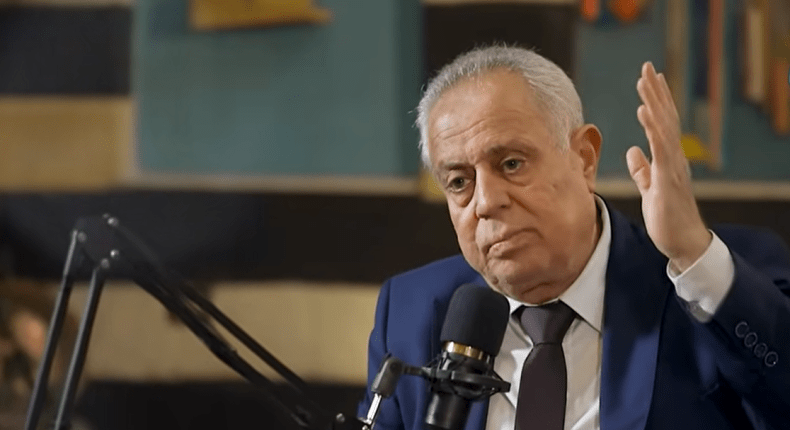
Dr. Abdul Hamid Aqil al-Awak was elected Speaker of Syria’s People’s Assembly, marking a significant development as the country navigates a new political phase. This election represents the convening of the first parliament since the fall of Bashar al-Assad, signaling a profound shift in the nation's governance. The election occurred during the Assembly’s inaugural session, which formally convened on July 12, 2026. President Ahmed Sal-haraa and several senior ministers were present at the session, showing the importance of the event and the official recognition of the legislative body's new role.
The newly constituted Assembly commences its work in a nation described as emerging from decades of one-party rule, personal dictatorship, and a devastating war. This transition notes the profound challenges and opportunities facing Syria's legislative body as it begins its mandate in a post-conflict environment. The presence of key government figures, including President Ahmed Sal-haraa, Foreign Minister Asaad al-Shaibani, and Interior Minister Anas Khattab, at the inaugural session further signals official recognition of the Assembly's key role in the country's evolving political landscape. Their attendance at the session where members took the oath of office emphasized the gravity of the occasion.
Speaker Election Results and Parliamentary Process
The election for the Speaker of the People's Assembly was a multi-candidate contest, with Dr. Abdul Hamid Aqil al-Awak emerging as the clear victor. Dr. Al-Awak secured a majority of the votes cast for Speaker, receiving 99 out of 206 ballots. This substantial mandate reflects significant support among the newly elected members of parliament. The election process also saw Moayad Hayel al-Qiblawi contest the Speakership, receiving 75 votes, indicating a notable level of support for his candidacy as well. Additionally, Mohammed Ramez Koraj drew 31 votes for the position, further illustrating the competitive nature of the election. During the balloting, one ballot was reportedly left blank, a detail that reflects the careful recording of the parliamentary proceedings.
Dr. Al-Awak, a prominent academic with a distinguished legal background, joined Mardin Artuklu University in Turkey, beginning his tenure there in 2016. His election to the Speaker's role follows a career that has included significant academic contributions and a deep engagement with legal and constitutional matters. The voting results, with 99 votes for Dr. Al-Awak, 75 for Moayad Hayel al-Qiblawi, and 31 for Mohammed Ramez Koraj, along with one blank ballot, indicate a clear preference for Dr. Al-Awak among the Assembly members present. The count of 206 votes suggests a strong participation from the legislative body in selecting its new leader, showing the democratic process undertaken in the chamber.
Awak's Extensive Legal and Political Journey
Abdul Hamid al-Awak was born in 1966 in Hasakah’s Ghwayran district, located in northeastern Syria. His academic and professional career began with rigorous legal studies at the University of Aleppo, where he successfully graduated in 1990, laying the groundwork for his future contributions to Syrian jurisprudence. Following his initial degree, al-Awak pursued further specialization in public and administrative law. He earned a diploma in public law and a master’s degree in administrative law from the Islamic University of Lebanon in 2009, deepening his expertise in critical areas of governance and state administration. His academic pursuits culminated with a doctorate in constitutional law, which he completed at Beirut Arab University, solidifying his credentials as an expert in the foundational legal frameworks of a state.
Al-Awak's professional experience in Syria included a period working within the legal affairs department of the Tigris and Khabur Basin Directorate from 1993 to 1998. This role provided him with practical experience in state administration and legal oversight. He subsequently joined the Syrian judiciary, where he rose to the esteemed position of counsellor within the Ministry of Justice, demonstrating his commitment and capability within the country's legal system. A significant and defining moment in his career occurred after the uprising began in 2011, when al-Awak reportedly refused to order the detention of demonstrators. This principled decision marked a turning point in his life, leading to his departure from Syria in 2014, after which he settled in Turkey, beginning a period of exile.
While in exile, al-Awak remained actively engaged in political and legal spheres, continuing to advocate for justice and reform. He served as a legal adviser to the Stabilisation Support Unit, an organization focused on supporting governance and stability in areas affected by the Syrian conflict, where his expertise was invaluable. His knowledge and experience were further recognized through his appointment to the Syrian Constitutional Committee, where he represented the Syrian Negotiations Commission, playing a key role in efforts to draft a new constitution for the country. However, al-Awak later withdrew from the Syrian Constitutional Committee in 2018, a decision that reflected his independent stance and perhaps differing views on the committee's direction. Prior to his recent election as Speaker, he also contributed significantly to academia by lecturing at the Faculty of Law at Al-Furat University, sharing his extensive legal knowledge and insights with a new generation of students. His academic contributions continued with his tenure at Mardin Artuklu University in Turkey, which he joined in 2016.
Return to Syria and Vision for a New Era
Dr. Abdul Hamid Aqil al-Awak's journey brought him back to Syria following the fall of the Assad regime in December 2024, marking a key moment in his career and for the nation. Upon his return, he initially took charge of the Faculty of Law at the University of Aleppo on an interim basis, demonstrating his continued dedication to legal education and institutional rebuilding. In March 2025, President Sharaa appointed him to lead the committee responsible for drafting the constitutional declaration governing the transitional period, a testament to his expertise in constitutional law and his perceived ability to navigate complex legal and political challenges.
The newly elected People's Assembly marks the first parliament to convene since the fall of Bashar al-Assad, signaling a truly new political era for Syria. Dr. Abdul Hamid Aqil al-Awak, in his influential role as Speaker, advocates for a state founded on the fundamental principles of equal citizenship and professional competence. He has publicly rejected any form of political quota-sharing that is based on sectarian or ethnic identity, emphasizing a unified national approach that prioritizes merit and shared national identity over divisive affiliations. This stance is key for a country seeking to overcome past divisions and build a cohesive society.
Dr. Al-Awak is also a staunch proponent of maintaining the independence of both the parliament and the judiciary, viewing them as essential pillars for a stable, just, and democratic governance system. He believes that strong, independent institutions are critical to preventing a return to authoritarian rule and ensuring accountability. His vision includes a meticulously planned process where an elected constituent assembly would be tasked with drafting a new national charter. This charter would then be followed by a nationwide referendum for a permanent constitution, ensuring broad public participation and legitimacy in the foundational document of the country. This proposed sequence aims to establish a legitimate and widely accepted foundational document for the country, built on popular consent. Dr. Al-Awak is widely regarded as a consensual figure, a perception that may significantly aid in unifying disparate political factions within the new parliamentary framework and fostering a spirit of cooperation. His election as Speaker and his outlined policy positions suggest a deliberate and determined move towards institutional reform and a decisive departure from the political structures that characterized previous regimes in Syria.
Context and Presidential Endorsement
The election of Dr. Al-Awak and the convening of the new People's Assembly are set against the backdrop of a nation striving to rebuild and establish a new political order. The inaugural session, held on July 12, 2026, was a moment of national significance. President Ahmed Sal-haraa, alongside Foreign Minister Asaad al-Shaibani and Interior Minister Anas Khattab, attended the session where members took the oath of office, lending the full weight of the executive branch to the new legislative body. During this momentous occasion, President Sharaa delivered a powerful address, urging members to make parliament a forum for justice and truth. He further implored them to promote dialogue, uphold the rule of law, and foster respect for institutions, setting a clear mandate for the new legislative era. This presidential endorsement shows the government's commitment to democratic principles and the key role the People's Assembly is expected to play in shaping the future of Syria. The challenges ahead are considerable, but the election of Dr. Abdul Hamid Aqil al-Awak as Speaker, with his background and stated vision, signals a determined effort towards building a more inclusive and just Syrian state.