Syria’s Sovereign Wealth Fund is now entering its second year of operation, yet its financial details remain largely undisclosed, raising significant questions about its transparency and actual impact. Despite being operational for over a year, the actual size of assets under management, the fund’s specific sources of financing, and the returns generated from its various investments have not been publicly revealed. This lack of financial disclosures persists even as the total value of planned projects under the fund is estimated at an ambitious figure of about one hundred billion dollars. The institution’s second year commences under a cloud of scrutiny regarding its operational transparency and the tangible progress of its numerous initiatives.
Ambitious Project Portfolio
Syria’s Sovereign Wealth Fund manages an extensive real estate portfolio, exceeding seventy million square meters of land designated for development across forty-seven distinct sites within the country. The fund has actively promoted various investment opportunities to potential partners and investors. These include the Centro Hotel project, strategically located in Damascus’s Mezzeh district, alongside development plans for officers’ clubs in Latakia. Other prominent ventures noted by the fund include Damascus Hills, Mina Amrit, and Marsa Shams, each representing significant development potential.
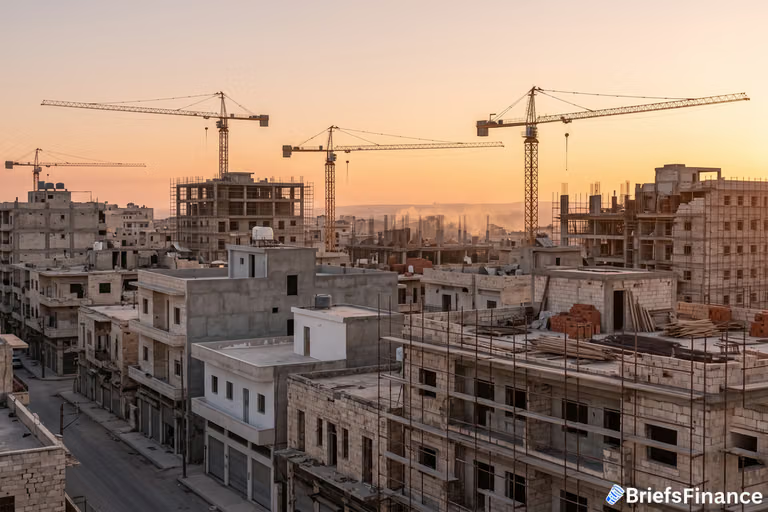
A particularly significant undertaking within the fund's portfolio is the New Damascus project. This ambitious mixed-use city is planned to stretch along both sides of the Damascus-Beirut road, extending from the Mezzeh highway all the way to Saboura. The sheer scale of this project is notable, as it is slated to cover an expansive area of thirty-three million square meters. The required investment for the development of New Damascus is estimated to be substantial, falling between forty and fifty billion dollars. A significant portion of this, specifically seven point six billion dollars, has been allocated for the essential infrastructure development necessary to support such a large-scale urban center. Another large-scale development, Laodicea Ad Mare, further illustrates the fund's expansive vision, spanning eleven and a half million square meters between al-Bassa and al-Sanawbar, situated just south of Latakia. These projects show the fund's aim to reshape urban and coastal landscapes across Syria.
The fund’s investment interests also encompass critical national infrastructure, specifically airport facilities. These include the airports in Latakia, Deir ez-Zor, and Qamishli, indicating a strategic focus on improving connectivity and logistics within the country. Additionally, the fund has taken over facilities and factories previously owned by businessman Rami Makhlouf, integrating these assets into its broader management structure. A notable settlement reached with businessman Samer Foz resulted in the transfer of ownership of thirty-two companies and various assets to the state. These assets, which span the industrial, commercial, services, and banking sectors, are now managed through both the Development Fund and the Sovereign Wealth Fund. Estimates suggest the value of these recovered or transferred assets amounts to billions of dollars, significantly bolstering the fund's holdings. The fund currently owns approximately two thousand properties in total, with an estimated combined value of up to two and a half billion dollars, noting the considerable scale of its real estate and corporate acquisitions.
Operational Structure and Scope
During its first year of operation, Syria’s Sovereign Wealth Fund marked a key milestone by launching its official website, a step towards establishing its public presence. Fund officials provided insights into the institution's vast structure and operational scope at the first Syrian‑Emirati Forum held last May. During this forum, they stated that the institution encompasses thirty‑six specialized sectors and oversees eleven central companies. Collectively, these entities employ a substantial workforce of more than forty thousand people, indicating the fund's significant role as an employer and economic actor within Syria.
The fund is being assigned a direct and key role in investments classified as strategic sectors for the nation's future. This includes its involvement in the establishment of the new mobile operator, which is slated to replace MTN Syria, a critical development in the telecommunications sector. This new mobile company will receive a twenty‑year license to operate, with the fund retaining a significant twenty‑five percent of its shares. The winning investor, who will operate the new network, will hold the remaining seventy‑five percent, establishing a public-private partnership in this essential utility.
The fund has also actively begun establishing or managing specialized companies to execute its diverse portfolio of projects. These include Sarh Holding, a key player in its investment strategy, and Kunooz al‑Sham for Mining and Investment, indicating a focus on natural resources and industrial development. Taiba Petroleum is among the companies explicitly linked to the fund, showing its reach into the energy sector. These entities form the operational arms through which the fund aims to implement its ambitious development agenda.
Transparency and Governance Concerns
Despite the ambitious scope and significant reported asset base of Syria's Sovereign Wealth Fund, most of the projects announced by the institution remain firmly in the planning or investment-promotion phase. There has been no public indication that these initiatives have moved into large-scale implementation, raising questions about the actual progress and execution capabilities of the fund. This lack of visible advancement on major projects contributes to the broader concerns about the fund's operational transparency.
A core issue is the institution's failure to publish any periodic financial reports. Such reports are standard practice for sovereign wealth funds globally and would typically detail the size of assets under management, providing a clear financial snapshot. Consequently, the value of returns generated by the fund, the precise volume of investments that have actually entered implementation, or the overall financial results of its operations during its critical first year have not been disclosed to the public. This absence of financial reporting makes it challenging for external observers to assess the fund's performance and accountability.
Fund officials have publicly stated that the institution relies on a governance system that is based on Syrian law, asserting its adherence to national legal frameworks. They also claim their governance framework adheres to the Santiago Principles, a globally recognized set of 24 generally accepted principles and practices for sovereign wealth funds. These principles are specifically designed to promote transparency, good governance, accountability, and prudent investment practices among such entities. However, the persistent lack of public financial reporting, including detailed information on assets, liabilities, and investment returns, significantly complicates any independent assessment of these claims. Without concrete financial disclosures, the fund's adherence to these international best practices remains difficult to verify, fostering an environment where opacity rather than transparency prevails.