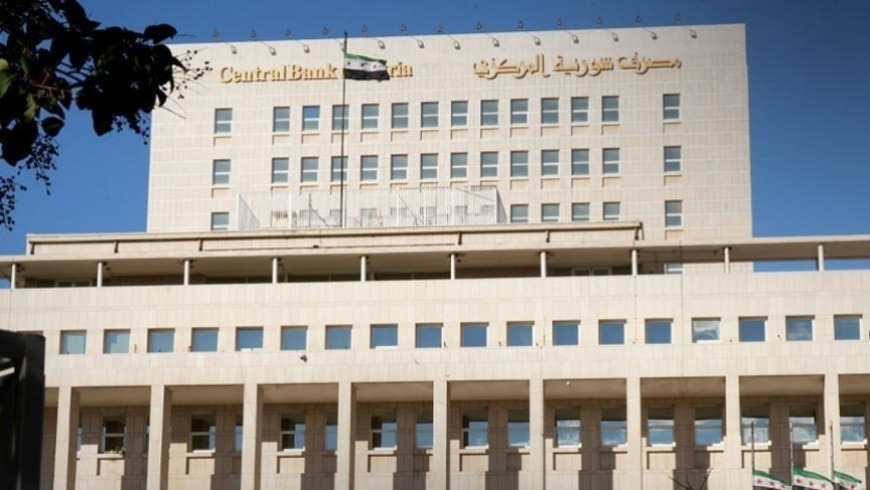
President Ahmad Al-Sharif issued a decree in mid-May, appointing Mohamed Safwat Abdel Hamid Raslan as Governor of the Central Bank of Syria, replacing Abdul Qader Al-Husariya. This change is part of a broader wave of ministerial and administrative shifts occurring across the country. The appointment, formalized through a presidential decree, signifies a key moment for the nation's financial leadership, coming at a time of significant economic uncertainty and the pressing need for strong policy formulation. Upon taking office, Raslan pledged to "rebuild monetary and financial stability while avoiding temporary fixes and improvised measures." He emphasized that "The Central Bank’s performance will be judged by tangible results reflected in citizens’ daily lives—not by rhetoric." The new governor faces immediate challenges in addressing Syria's complex economic conditions, which have been exacerbated by years of conflict and sanctions.
Raslan's Vision and Background
Mohamed Safwat Abdel Hamid Raslan, upon taking office, pledged to "rebuild monetary and financial stability while avoiding temporary fixes and improvised measures." Raslan emphasized that "The Central Bank’s performance will be judged by tangible results reflected in citizens’ daily lives—not by rhetoric." This commitment notes a desire for practical, impactful reforms rather than superficial adjustments. The Central Bank’s mandate primarily focuses on liquidity management, inflation control, and price stability, all critical areas requiring immediate attention to stabilize the national currency and foster economic predictability. Raslan's approach is characterized by a commitment to calm, gradualism, and realism in monetary management, suggesting a cautious and methodical strategy to navigate the country's financial woes. This measured perspective aims to avoid rapid, potentially destabilizing policy shifts that could further erode public trust or economic confidence.
Raslan's career includes diverse international and regional banking experience, providing him with a broad understanding of financial systems and management strategies. He previously served as Director General of the Syrian Development Fund, a role that likely provided him with insight into the nation's development priorities and financial infrastructure needs. His professional background also encompasses significant roles in the European banking sector, including positions as a credit business manager at the Apotheker- und Ärztebank in Germany, and a banking expert at Targobank and Deutsche Bank. He gained experience in advisory capacities as a consultant for EY and Capco, and served as a branch manager at Byblos Bank in Syria, demonstrating a blend of international expertise and local market knowledge. These varied experiences are expected to inform his leadership at the Central Bank, bringing a full skill set to the challenges ahead.
Raslan had left Syria for Germany during the war, a period during which he applied for asylum and subsequently obtained German citizenship. His decision to return to Syria after the fall of the Assad regime marks a significant personal and professional transition. In July 2025, President Ahmad Al-Sharif appointed Raslan Director General of the Syrian Development Fund under Decree No. 117, a role that served as a precursor to his current appointment as Central Bank Governor. This trajectory shows a return of experienced professionals to key government roles, signaling an effort to rebuild national institutions with individuals possessing both international exposure and a commitment to their home country.
Regarding the challenges ahead, Mohamed Olabi, a prominent economic analyst, stated, "Monetary policy cannot succeed without a clear fiscal policy or sufficient Central Bank independence. Any new governor, he said, will face the same limitations unless administrative changes are accompanied by broader economic and institutional reforms." This expert perspective shows the systemic nature of Syria's economic problems, suggesting that the Central Bank's efforts, however well-intentioned, must be part of a larger, coordinated governmental strategy. The interdependency of monetary and fiscal policies means that the Central Bank's effectiveness will be significantly influenced by decisions made across other government ministries and the overall commitment to structural reform.
Deep-Rooted Economic Crisis
The Central Bank of Syria launched its 2026–2030 strategy in April of last year, outlining its long-term objectives for the nation's financial future. This full strategy is built on several key pillars, including the replacement of currency, the expansion of financial inclusion initiatives, and efforts to deepen integration with the global financial system. The currency replacement pillar aims to address issues related to currency stability and public confidence, potentially involving the introduction of new banknotes or a revaluation process. Expanding financial inclusion seeks to bring a larger portion of the population into the formal banking sector, thereby increasing financial literacy and access to services. Deepening integration with the global financial system is key for facilitating international trade, attracting foreign investment, and normalizing Syria's economic relations with the rest of the world. Despite these strategic plans and the outlined long-term vision, expectations for an improved exchange rate had risen sharply in recent months, even though underlying economic indicators did not justify such optimism. This disconnect between public expectation and economic reality notes the challenges in managing public sentiment amidst a fragile economic environment.
Challenges persist in accurately assessing the economic situation due to an absence of clear, official inflation indicators. The lack of transparent and reliable data makes it difficult for policymakers to formulate effective responses and for the public to understand the true state of the economy. This opacity further complicates the Central Bank's efforts to manage inflation and maintain price stability. A significant portion of the money supply also remains outside the formal banking sector, complicating monetary policy implementation and reducing the Central Bank's ability to exert control over the economy. This situation reflects broader structural issues within the Syrian financial system, where informal economic activities often overshadow formal ones. Unofficial estimates suggest that inflation levels are significantly higher than previously acknowledged by official sources, further widening the gap between perceived and actual economic conditions. This discrepancy complicates efforts to stabilize the economy and manage public expectations, as official figures may not accurately reflect the daily struggles faced by citizens.
The country's banking infrastructure is notably underdeveloped, with statistical data indicating that Syria has only one bank branch for approximately every 40,000 citizens. This limited access to banking services contributes to the large share of money operating outside official channels and hinders financial inclusion efforts, making it difficult for citizens to access credit, save money, or conduct transactions securely. The Syrian economy also faces substantial hurdles from its heavy reliance on imports. This dependency is exacerbated by weak domestic production and an apparent lack of full policies designed to support sustainable economic growth, leading to a significant trade imbalance and vulnerability to external economic shocks. The broader economic trajectory in Syria is profoundly shaped by factors extending beyond monetary policy, including fiscal policy decisions made by the government, ongoing energy constraints, persistent production challenges, and the dynamics of imports. These external influences can significantly impact the effectiveness of any central bank's initiatives, showing the need for a holistic governmental approach. These factors collectively present a significant challenge to the new Central Bank governor's ability to restore stability and foster sustainable economic development.
Obstacles to Global Financial Integration
Syria's integration into the global financial system faces significant hurdles, despite certain channels remaining open. Mohamed Olabi stated that Syria was never fully disconnected from the SWIFT system, clarifying that "the main obstacle lies with correspondent banks, which remain hesitant due to compliance risks and incomplete reforms." This key distinction notes that while the technical infrastructure for global transactions may exist, the willingness of international financial institutions to engage with Syrian banks is severely limited. This reluctance stems from concerns about regulatory compliance, particularly regarding anti-money laundering (AML) and counter-terrorist financing (CTF) frameworks, as well as broader geopolitical risks. The hesitation from these correspondent banks complicates any efforts by the Central Bank of Syria to re-establish strong ties with the global banking network, hindering trade, investment, and financial flows.
Reintegration into global finance requires a full approach, necessitating deep domestic reforms. These reforms must encompass improvements in governance, legislation, compliance protocols, and anti-money laundering frameworks to meet international standards and rebuild trust. Strengthening governance within financial institutions and the regulatory body is critical to ensuring transparency and accountability. Legislative reforms are needed to update financial laws in line with international best practices. Strong compliance protocols are essential to demonstrate adherence to global financial regulations, while enhanced anti-money laundering frameworks are critical for combating illicit financial activities and reassuring international partners. Without these fundamental changes, the country's financial institutions will continue to encounter difficulties in engaging with international partners and attracting foreign investment, perpetuating Syria's economic isolation. The new Central Bank governor, Mohamed Safwat Abdel Hamid Raslan, will need to address these systemic issues to build confidence among global financial players and facilitate greater access to international markets for Syrian businesses. The perceived risks associated with current Syrian financial practices continue to deter correspondent banks, noting the urgency of internal structural adjustments and a commitment to international financial norms.
Expert and Researcher Perspectives
Abdul Qader Al-Husariya, the former Central Bank governor, has been named Syria’s Ambassador to Canada, an appointment that follows his replacement by Mohamed Safwat Abdel Hamid Raslan. This diplomatic posting suggests a continued role for the former governor in representing Syria's interests on the international stage, albeit in a different capacity. In his new role, Raslan has emphasized a measured approach to monetary management, advocating for calm, gradualism, and realism. This perspective suggests a departure from rapid, potentially destabilizing policy shifts, favoring a more cautious and sustainable path towards economic recovery. His commitment to these principles indicates an awareness of the delicate balance required to navigate Syria's complex economic landscape without exacerbating existing fragilities.
Experts indicate that the broader economic trajectory in Syria is profoundly shaped by factors extending beyond monetary policy. These include fiscal policy decisions made by the government, ongoing energy constraints, persistent production challenges, and the dynamics of imports. The effectiveness of the Central Bank's monetary interventions is inherently linked to the government's fiscal discipline and its ability to manage public finances responsibly. Energy constraints, such as fuel shortages and unreliable power supply, directly impact industrial output and daily economic activity, limiting growth potential. Production challenges across various sectors, stemming from infrastructure damage, lack of investment, and skilled labor shortages, further restrict the supply side of the economy. The heavy reliance on imports for essential goods and raw materials creates a constant drain on foreign currency reserves and exposes the economy to global price fluctuations. These external influences can significantly impact the effectiveness of any central bank's initiatives, showing the need for a coordinated national economic strategy that addresses these multifaceted issues.
Unofficial estimates also suggest that inflation levels are significantly higher than previously acknowledged by official sources. This discrepancy complicates efforts to stabilize the economy and manage public expectations, as official data may not accurately reflect the true cost of living and the erosion of purchasing power experienced by citizens. The interplay of these factors presents a complex environment for the new central bank governor, requiring not only astute monetary management but also effective collaboration with other governmental bodies and a clear understanding of the socio-economic realities on the ground. Raslan's success will ultimately depend on his ability to navigate these intertwined challenges and implement reforms that yield tangible improvements in the daily lives of Syrian citizens.