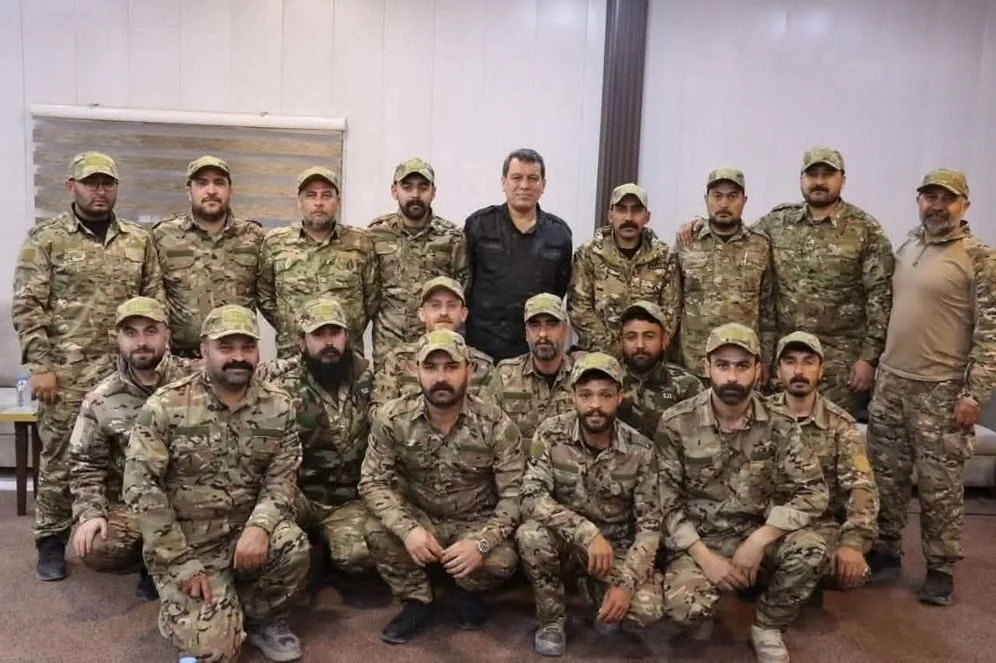
Sipan Hemo, the Deputy Syrian Defense Minister for Eastern Region Affairs, announced that the integration of the Syrian Democratic Forces (SDF) into the Syrian army has formally begun, following a late-January agreement that launched the military restructuring process. Hemo stated that the integration "remains in its early stages but has achieved tangible organizational progress through the incorporation of units from northern and eastern Syria." He added that the aim "is to streamline command and control and improve the management of military deployments." This significant development marks a key moment in the efforts to unify diverse military factions under a single national command structure, a long-standing objective for the Syrian government. The process is being carefully managed to ensure a smooth transition and effective consolidation of forces across various regions.
Hemo indicated that "work is underway to build new organizational frameworks and reposition forces in a way that harmonizes the various formations now entering the army’s structure." The integration remains partial, as "the number of SDF fighters exceeds the capacity of the four brigades formed so far. Additional formations will be required to absorb the remaining personnel." The final shape of the army "has not yet been determined" and awaits approval of internal regulations defining authorities and responsibilities, according to Hemo. He emphasized that integration decisions rest with each faction, provided they meet standards of readiness and discipline, with the overarching objective "to end the era of 'factionalism' and consolidate all forces under a single state institution." This approach aims to ensure that all integrated units adhere to the professional and operational standards of the Syrian army, fostering cohesion and effectiveness.
Military Restructuring Details
Four brigades have already been established as part of the ongoing military restructuring process. These newly formed units have been strategically deployed across key northern and eastern Syrian locations. Deployments include Kobani/Ain al-Arab, Hasakah, Qamishli, and Derik/Al-Malikiyah. The formation of these brigades represents a tangible step in the integration of Syrian Democratic Forces (SDF) personnel into the Syrian army's structure. This initial phase aims to absorb a portion of the SDF fighters, though officials have noted that the total number of SDF personnel exceeds the current capacity of these four brigades. Additional formations are anticipated to fully integrate the remaining forces, showing the scale of the undertaking. The geographical spread of these deployments covers significant areas previously under SDF control, indicating a broader effort to consolidate military presence and command structures across these regions. The process is part of a wider plan to unify various military factions under a single institutional framework, ensuring a more centralized and coordinated national defense.
The establishment of these brigades is a critical component of the broader military restructuring. Each brigade is designed to operate within the established chain of command of the Syrian army, integrating SDF personnel into a standardized military system. This involves training, logistical harmonization, and adherence to unified operational doctrines. The strategic placement of these brigades in areas such as Kobani/Ain al-Arab and Qamishli notes the government's intention to reassert its military presence and authority in these strategically important territories. This initial phase, while significant, also serves as a blueprint for future integrations, allowing the Ministry of Defense to refine its approach based on the experiences gained from these first four brigades.
Challenges and Future Steps
An agreement signed at the end of January outlined the integration of the Syrian Democratic Forces' (SDF) military and security structures into state institutions. This foundational agreement serves as the blueprint for the ongoing restructuring efforts, providing a legal and operational framework for the transition. Concurrently, the Ministry of Defense has adopted a new organizational framework, dividing the country into five principal military regions to streamline command and control. This regionalization is intended to enhance operational efficiency and ensure effective oversight across the entire national territory, including the newly integrated areas. The establishment of these regions is a strategic move to decentralize some administrative functions while maintaining centralized strategic direction.
Despite these steps, challenges persist in the integration process. The number of SDF fighters currently exceeds the capacity of the four brigades formed thus far, indicating that further organizational expansion will be necessary to absorb all personnel. This capacity challenge is a primary focus for the Ministry of Defense, which is actively working on plans for additional brigade formations. Officials also acknowledged problems in regions such as Afrin, Sere Kaniye/Ras al-Ain, and Tell Abyad, suggesting specific difficulties in those areas regarding the implementation of the integration plan. These localized issues point to the complex nature of harmonizing diverse military and security forces under a unified national structure, often compounded by local political dynamics and historical grievances. The ongoing efforts aim to address these capacity and regional challenges as the restructuring progresses, with a commitment to finding practical solutions for each specific context. Successfully overcoming these hurdles will be key for the long-term stability and effectiveness of the integrated forces.
Ministerial Statements and Vision
The 'Eastern Region' under the new military restructuring plan encompasses the governorates of Hasakah, Raqqa, and Deir ez-Zor. This designation clarifies the administrative and operational scope for the command structure overseeing these vital areas. Regarding broader integration efforts, decisions for other armed formations to join the Syrian army rest with each individual faction. These formations must meet established standards of readiness, discipline, and professional competence to be considered for integration, ensuring that all incoming units uphold the integrity and operational standards of the national army. Deputy Syrian Defense Minister Sipan Hemo also addressed specific reports, denying the existence of any plan to form an independent 'Kurdish brigade' within the Afrin region. This clarification underlines the centralized nature of the restructuring, aiming to absorb diverse groups into a unified national military framework rather than creating ethnically or regionally distinct units. The focus remains on adherence to army standards for all incorporated units, reinforcing the principle of a single, cohesive military institution for the entire nation. This vision emphasizes national unity and the elimination of fragmented military control across the country.