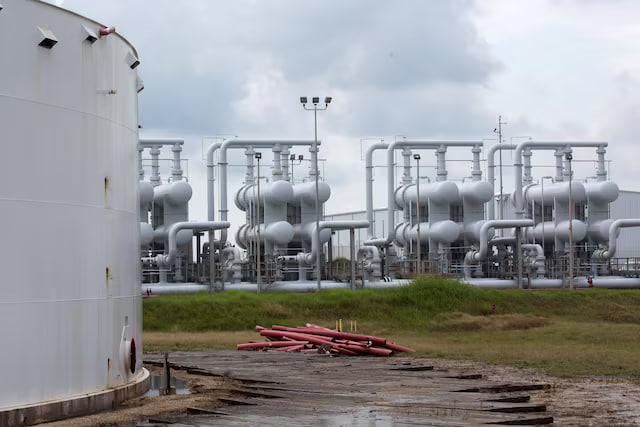
The United States announced on Thursday its plan to lend up to 92.5 million barrels of crude oil from the Strategic Petroleum Reserve, a critical move aimed at stabilizing global energy markets. The Trump administration confirmed the intention to make this significant quantity available, showing the urgency of the situation. This decision, announced on May 1, 2026, comes amid heightened tensions with Iran, which have significantly impacted the international oil landscape. The release is designed to mitigate severe disruptions to the global supply chain, which have been exacerbated by recent geopolitical events.
US Reserve Commitment Details
The 92.5 million barrels slated to be loaned represent a substantial portion of a larger commitment by the United States to withdraw a total of 172 million barrels from its strategic reserves. This overarching withdrawal plan aims specifically to address prevailing market conditions, which have seen considerable volatility. The decision to make this quantity available for lending reflects a proactive stance by the U.S. Government to ensure energy security and prevent further economic instability. The commitment to withdraw 172 million barrels demonstrates the scale of the U.S. Response to the current global energy challenges.
Global Oil Market Context
The U.S. Action is primarily intended to address a severe shortage in global oil supply. This critical shortage has been directly caused by the continued closure of the Strait of Hormuz, a vital maritime chokepoint for global oil shipments. The closure has led to a complete halt of supplies from the Gulf region, creating an immediate and profound impact on available crude oil. The disruption to oil shipments through the Strait of Hormuz and the cessation of Gulf supplies have, in turn, created significant inflationary pressures on the global economy. This unprecedented market instability has prompted widespread concerns about broader economic impacts worldwide, affecting various sectors and consumer prices. The severe supply deficit necessitates immediate and coordinated international responses to prevent a deeper crisis.
Strategic Petroleum Reserve
The Strategic Petroleum Reserve (SPR) serves as an emergency fuel supply maintained by the United States Department of Energy. It is recognized as the world's largest supply of emergency crude oil, strategically stored in a network of massive underground salt caverns located along the Texas and Louisiana Gulf Coasts. The reserve's primary purpose is to mitigate major supply disruptions and address adverse market conditions, such as those caused by geopolitical tensions, natural disasters, or significant infrastructure failures. Its very existence aims to provide a key buffer against sudden oil shortages, thereby ensuring energy security and stability for the United States economy. The SPR has been utilized on several occasions throughout its history to counter global supply shocks, demonstrating its vital role in national and international energy policy. The current release shows its importance in responding to acute market needs.
International Energy Agency Pact
The U.S. Withdrawal is part of a wider international agreement established in March, involving more than 30 member countries of the International Energy Agency (IEA). This collaborative effort aims to inject approximately 400 million barrels of oil into global markets, representing a significant coordinated response to the supply crisis. This broader agreement coordinates efforts among participating nations to address supply concerns comprehensively and collectively. The international pact notes the global nature of the current energy challenges and the necessity for multilateral cooperation to stabilize markets and ensure adequate supply. The collective action by IEA members is designed to send a strong signal to the market about the commitment to address the supply deficit.