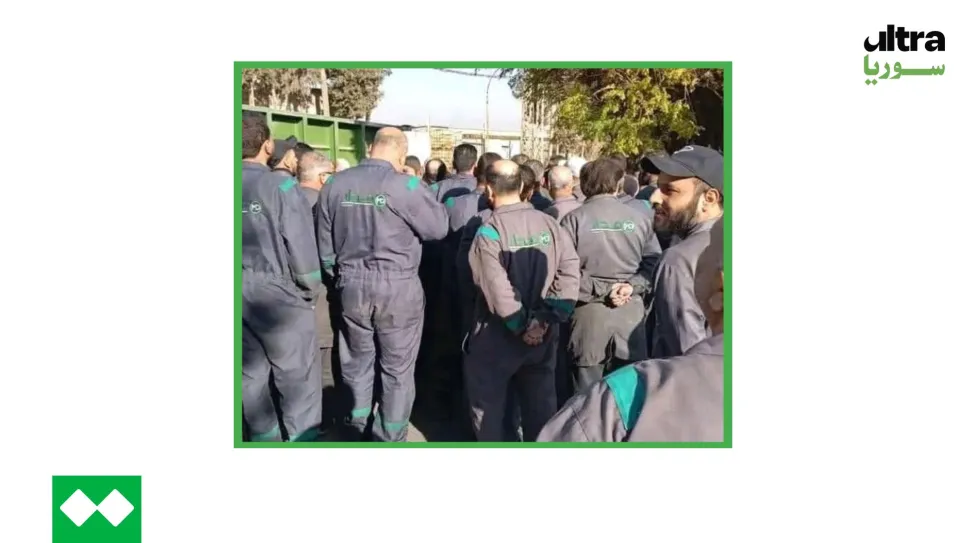
Workers at the Zenobia Ceramic and Sanitary Ware Company in Rural Damascus's Al-Kiswah district have initiated an open-ended walkout amid escalating labor unrest across the region. This significant industrial action began recently, following similar disputes at other manufacturing sites, noting a growing wave of worker discontent. Management at the Madar Detergent Factory, another key industrial player, also declared Thursday an official holiday, an action workers characterized as an attempt to disrupt an ongoing strike there. These concurrent actions show the severity of the industrial climate. Workers are primarily demanding better wages, with a proposed $100 monthly increase. At current parallel-market rates, this sum equates to approximately 1.4 million Syrian pounds, a figure that notes the significant financial impact of the demands and the disparity between official and unofficial exchange rates.
Zenobia Ceramics Demands and Standoff Intensify
Daily wages for workers at the Zenobia Ceramic and Sanitary Ware Company do not exceed 50,000 legacy Syrian pounds, a sum that workers contend is insufficient to meet basic living costs. Workers at Zenobia initially demanded a flat monthly raise of one million legacy Syrian pounds, seeking a substantial increase to offset the erosion of their purchasing power. This action followed Zenobia management's disregard for a formal list of demands that had been submitted by employees ten days prior to the strike, indicating a breakdown in communication and negotiation channels. The facility itself reportedly lacks basic medical services and an ambulance for its workers, adding to their grievances regarding working conditions. After management's failure to respond to a 24-hour ultimatum, workers at Zenobia escalated their demand to a $100 monthly increase, signaling their determination to achieve a more substantial and internationally benchmarked wage adjustment.
Zenobia's management has stated that it remains fully compliant with Syria’s Labor Law No. 17 of 2010, asserting its adherence to national regulations. The company employs approximately 4,000 workers across its facilities in Adra and Al-Kiswah, making it a significant employer in the region. Management also asserted that it has implemented recent presidential decrees aimed at raising the minimum wage. These include Decree No. 102 of 2025, which raised the minimum wage to 7,500 new Syrian pounds, and Decree No. 67 of 2026, which further increased it to 12,560 new Syrian pounds. Despite these stated compliances and adjustments, workers maintain that the increases are insufficient to combat the current economic pressures.
Madar Detergent's Parallel Action and Partial Resolution
Workers at the nearby Madar Detergent Factory have staged parallel protests, with their stoppage having entered its second day, demonstrating a sustained commitment to their demands. These demonstrations unfolded concurrently with labor unrest at the Zenobia Ceramic and Sanitary Ware Company, suggesting a coordinated or inspired movement across the industrial sector. Madar factory management rejected demands from its workforce to grant permanent status to contract-based employees, a key point of contention for staff who seek greater job security and benefits. The abrupt declaration of Thursday as an official holiday by Madar factory management was viewed by workers as a tactic to disrupt the ongoing strike, further exacerbating tensions between labor and management.
Despite the ongoing disputes and the management's initial resistance, an initial agreement was reached at Madar for a wage increase of one million legacy Syrian pounds for its workers. This partial resolution addresses one significant aspect of the labor demands, providing some financial relief. However, the critical issue of permanent employment for contract staff remains unresolved, indicating that the potential for future industrial action persists. The parallel actions at Madar and Zenobia highlight a broader pattern of industrial unrest in Rural Damascus, driven by similar underlying economic pressures and worker grievances. The interconnectedness of these disputes suggests a systemic challenge facing the industrial sector.
Economic Strain and Worker Grievances Show Broader Crisis
The deepening economic pressure faced by employees in the region is a central factor driving these strikes. The proposed $100 monthly increase at Zenobia reflects a desperate attempt by workers to secure a living wage amidst rampant inflation.
Economist Younes Olleibi stated that the private sector in Syria is experiencing significant stress, largely due to high inflation eroding purchasing power. "For years, economic discourse assumed the private sector would absorb shocks, create jobs, and raise incomes," Olleibi said, reflecting on past economic expectations. "What we’re seeing now shows the private sector is under immense strain. Inflation has wiped out purchasing power, and the crisis has fractured the core relationship between employers and their workforce." Olleibi's analysis shows the profound impact of the economic downturn on both businesses and their employees.
Olleibi further noted that the country's trade unions are co-opted by the state, and independent civic spaces are suppressed. This situation leaves workers without established institutional channels for negotiation, often forcing them into direct industrial action to voice their grievances. The absence of these formal avenues contributes significantly to the volatility of labor disputes in the region, as workers feel they have no recourse but to strike. The current wave of strikes in Rural Damascus thus represents not only demands for better pay and conditions but also a symptom of a broader institutional vacuum and severe economic hardship.