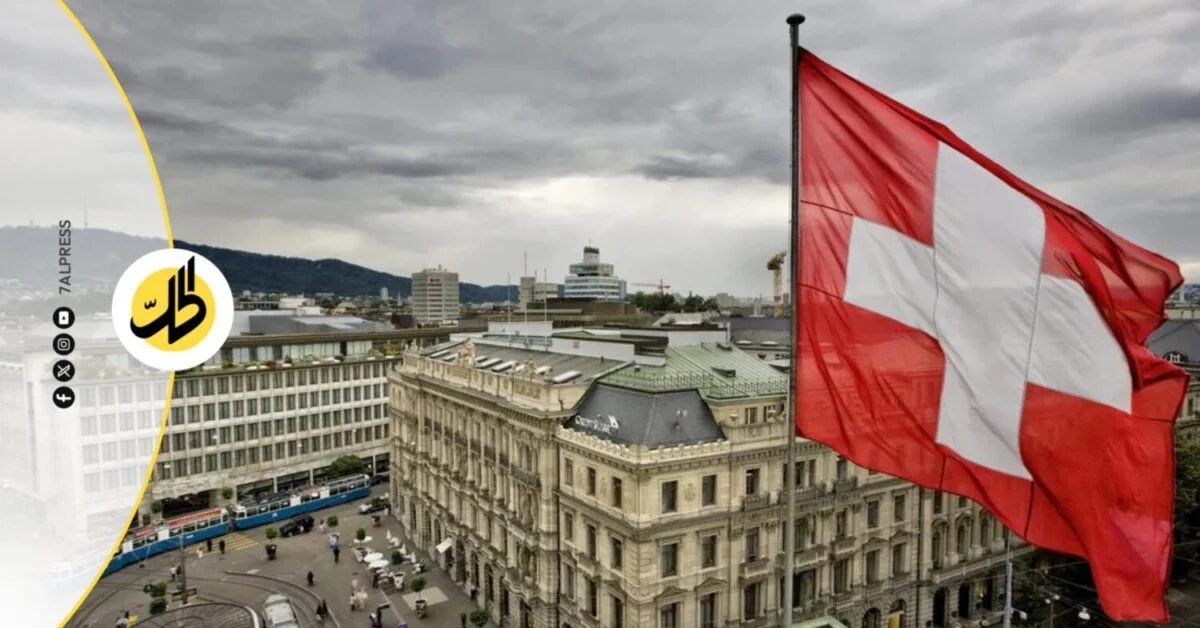
Switzerland has revised its sanctions regime on Syria, with the Swiss State Secretariat for Economic Affairs (SECO) announcing the amendment. The change, made on June 15, 2026, saw seven entities delisted, including the Ministries of Defense and Interior. These updated provisions officially entered into force at 23:00 on June 16, 2026. The revision marks a significant adjustment to Switzerland's approach to Syrian sanctions, reflecting a nuanced shift in its foreign policy regarding the Middle Eastern nation.
The decision to ease these specific sanctions comes after a period of evaluation and coordination with international partners. This move by Bern signals a strategic alignment with broader European policy initiatives concerning Syria. The Swiss government's announcement through SECO emphasized the careful consideration taken in adjusting these restrictive measures, ensuring that the changes are consistent with its humanitarian principles and international obligations. The delisting of these seven entities represents a notable departure from previous, more full sanction policies, indicating a recalibration of Switzerland's engagement with the Syrian state apparatus.
Delisted Syrian State Entities
Seven state entities have been removed from Switzerland's restricted lists concerning Syria. These entities include key governmental departments and security organizations. Specifically, the Ministries of Defense and Interior are among the seven delisted entities, signifying a direct reduction in punitive measures against core elements of the Syrian state. The delisted entities also encompass several key intelligence and security organizations, which had previously been targeted due to their roles within the Syrian government structure.
Among these, the Air Force Intelligence Directorate, the General Intelligence Directorate, the Military Intelligence Directorate, and the Political Security Directorate are no longer subject to Swiss sanctions. These intelligence bodies play critical roles in Syria's internal security and defense framework. Their removal from the sanctions list suggests a re-evaluation of their immediate impact on Swiss interests or a strategic decision to differentiate between various state functions. Additionally, the Higher Institute for Applied Sciences and Technology (HIAST), an educational and research institution, has also been delisted. HIAST, known for its scientific and technological development programs, particularly in areas like advanced computing and defense-related research, had previously been under sanctions due to its perceived ties to the Syrian military and government. Its delisting could facilitate certain academic or technological exchanges, albeit under a still-existing broader sanctions framework. These removals collectively represent a significant adjustment to the Swiss sanctions framework regarding Syria, focusing on specific governmental and security apparatuses.
In a separate but concurrent development, Switzerland expanded its sanctions list related to Ukraine. This expansion saw the addition of 16 individuals and seven entities to the existing measures targeting the Russian Federation. The Swiss government's actions reflect a dual approach to its international sanctions policy, adjusting restrictions on Syria while reinforcing measures against the Russian Federation in response to ongoing geopolitical developments. The simultaneous nature of these announcements shows Switzerland's active and adaptive role in international sanctions regimes, responding to different regional conflicts with tailored measures.
Alignment with European Union
The decision by Switzerland brings its policy into alignment with measures adopted by the European Union in May 2026. The European Union had previously removed the same Syrian state organs from its sanctions framework during that month, setting a precedent that Switzerland has now followed. This alignment notes a coordinated effort between Switzerland and the EU in managing their respective sanctions policies, particularly concerning the Syrian government. The EU's decision to delist these entities came after a review of its own restrictive measures, suggesting a shared assessment of the current situation in Syria among European nations.
While easing some restrictions by delisting these entities, the EU simultaneously extended restrictive measures against individuals and organizations linked to the former Assad regime until June 1, 2027. This extension indicates that despite the targeted delistings, both the EU and, by extension, Switzerland, maintain a cautious stance towards the broader Syrian political landscape. The continued sanctions against specific individuals and organizations associated with the former regime show a persistent concern regarding human rights and political accountability in Syria. This dual approach—easing some sanctions while extending others—reflects a complex diplomatic strategy aimed at facilitating certain engagements while maintaining pressure on other fronts.
The Swiss adjustments to its Syria-related sanctions run parallel to its broader international sanctions policy, demonstrating a consistent framework for managing international relations through economic measures. In a separate action, Switzerland expanded its sanctions list concerning Ukraine, further illustrating this dual approach. Among the newly listed entities in the Ukraine-related measures were the Russian children’s center “Smena” and the Avangard military youth camp. These additions were made in response to their involvement in activities deemed to violate international law or contribute to the conflict in Ukraine. The inclusion of such distinct entities, including those focused on youth programs, notes the full nature of the expanded sanctions against the Russian Federation. These additions reflect a dual approach by the Swiss government, modifying Syrian restrictions while reinforcing measures against the Russian Federation, thereby showcasing its commitment to international norms and principles across different geopolitical contexts.
Swiss Sanctions History and Context
Switzerland’s sanctions architecture toward Syria dates back to May 18, 2011, establishing the initial framework for restrictive measures. This initial framework was implemented in response to the escalating conflict and human rights situation in Syria, aligning Switzerland with international efforts to pressure the Syrian government. The measures adopted at that time were full, targeting a wide range of individuals, entities, and economic sectors within Syria.
Bern began easing its Syrian sanctions on March 7, 2025, marking the first significant shift in its policy after years of stringent restrictions. This initial relaxation signaled a potential re-evaluation of the effectiveness and impact of the existing sanctions regime. Subsequently, Switzerland lifted most punitive measures on June 20, 2025, further relaxing its stance. This broader lifting of measures indicated a more substantial change in policy, moving away from a previously extensive sanctions approach to a more targeted one. The Federal Department of Economic Affairs, Education and Research (EAER) amended Annex 7 of the Ordinance on Measures against Syria as part of these adjustments, formalizing the changes in Swiss law.
The State Secretariat for Economic Affairs (SECO) also reported administrative updates to the listings of 18 individuals and four entities already subject to sanctions under Switzerland’s 2012 decree. These administrative updates ensure that the sanctions lists remain accurate and current, reflecting any changes in status or new information regarding the sanctioned parties. These ongoing adjustments, from initial imposition to subsequent easing and administrative refinement, show the dynamic nature of Switzerland's sanctions policy, which is regularly reviewed and updated in response to evolving international circumstances and diplomatic objectives. The recent delistings, therefore, are part of a longer trajectory of Swiss engagement with the Syrian crisis through the instrument of economic sanctions.