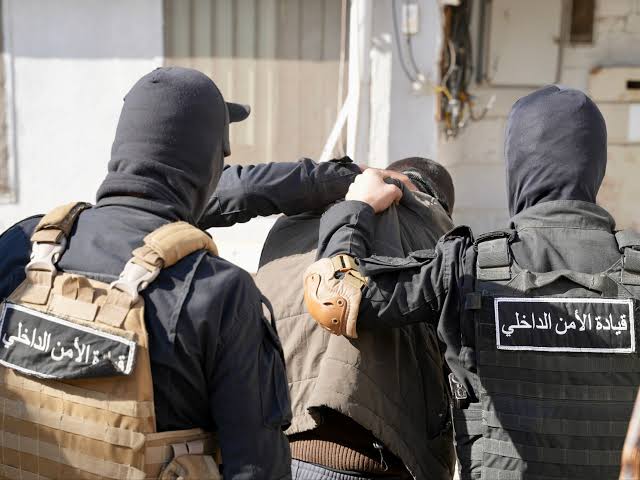
Syria’s Ministry of Interior announced the results of a three-month counter-terrorism campaign this week, detailing the arrest of 235 ISIS operatives. This extensive operation, which concluded recently, represents a significant stride in the nation's ongoing fight against extremist elements. The campaign was conducted jointly by the General Intelligence Service and the Ministry’s Counter-Terrorism Directorate, marking a coordinated effort between key security apparatuses. This concerted action represents the largest such effort since the start of the post-Assad era, showing the Syrian government's intensified focus on domestic security and counter-terrorism initiatives. Arrests were made across multiple provinces, showcasing the wide geographical scope of the operation. These provinces included Damascus, Deir ez-Zor, Homs, Hama, and Aleppo, targeting individuals associated with the militant group throughout various regions of the country. During the full campaign, Syrian security forces reported seizing significant quantities of weapons, various explosives, and logistical materials. These seized items were intended for ISIS activities, noting the group's continued, albeit diminished, attempts to carry out operations within Syria. The successful interdiction of these materials is key in disrupting the militant group's ability to plan and execute attacks.
Operation Details and Scope
The three-month counter-terrorism operation demonstrated a sustained effort to apprehend ISIS operatives. Arrests peaked in April, with 99 detainees apprehended by Syrian security forces during that month alone. This surge in arrests indicates a period of heightened activity and successful intelligence gathering. March saw the arrest of 80 individuals, marking a strong start to the campaign. Following this, 56 detainees were taken into custody in May, ensuring continued pressure on extremist networks. Cumulatively, the suspects included 198 Syrian nationals, indicating the persistent presence of local affiliates within the country. Additionally, 37 foreign fighters were among those arrested, noting the international dimension of ISIS's recruitment and operational reach. The capture of foreign fighters suggests that despite setbacks, ISIS continues to attract individuals from outside Syria's borders.
During the extensive campaign, security forces successfully dismantled a cell that was reportedly plotting an attack on the revered Sayyidah Zaynab shrine. This intervention prevented a potentially devastating incident at a significant religious site, demonstrating the effectiveness of intelligence-led operations. The Sayyidah Zaynab shrine, located in the southern suburbs of Damascus, holds immense religious importance and has been a target for extremist groups in the past. Additionally, authorities apprehended the group responsible for the bombing at the Mariamite Cathedral in Damascus's Dwelaa district. The successful identification and arrest of those behind this attack show the security forces' commitment to bringing perpetrators of violence to justice and protecting civilian populations and religious institutions. In March, a large-scale sweep conducted in eastern Deir ez-Zor led to the dismantling of multiple financial support networks linked to ISIS operations. These networks were critical for the group's sustained activities in the region, providing funding, resources, and logistical support. The disruption of these financial lifelines significantly hampers ISIS's ability to operate and recruit. The operation also targeted individuals involved in propaganda dissemination, recruitment efforts, and the facilitation of movement for operatives, further weakening the group's infrastructure.
ISIS's Diminished Capacity and Shifting Focus
ISIS leadership in Syria has experienced deep fragmentation since the political transition in Damascus, according to security assessments. This internal disarray has contributed to a re-evaluation of the group's operational priorities in the region, forcing a shift in strategy and focus. The disorganization at the top levels has made it increasingly difficult for the group to maintain cohesion and exert centralized control over its remaining cells within Syria.
The strategic focus of ISIS has notably shifted toward expanding its influence in Africa's Sahel region. This reorientation prioritizes countries such as Nigeria, Niger, and Mali, where the group seeks to establish a stronger presence and operational footprint. This strategic pivot indicates a recognition by ISIS of its diminished capacity in its traditional strongholds and an attempt to find new territories for expansion and resource generation. The move suggests a recalibration of resources and objectives away from its former strongholds in the Middle East, where it has faced sustained pressure from international and local forces. This geographical shift reflects the adaptive nature of the organization in the face of significant military and intelligence setbacks in Syria and Iraq.
A U.S. Department of Defense report observed that ISIS no longer maintains broad territorial control in Syria. This assessment indicates a significant reduction in the militant group's ability to hold and govern large areas, reflecting a degraded operational capacity within the country. The lack of territorial control contrasts sharply with the group's earlier dominance in parts of Syria and Iraq, where it once declared a self-proclaimed caliphate. This loss of territory has severely impacted its ability to generate revenue, recruit fighters, and project power. The report further noted that ISIS's operational capacity in Syria has reached its lowest point in years, a direct consequence of sustained counter-terrorism efforts. This decline follows a period of significant shifts in the regional security landscape, including increased international cooperation and improved national security capabilities within Syria.
Syria's Evolving Security Landscape
Syria formally joined the International Coalition to Defeat ISIS in November 2025, marking a collaborative effort against the militant group. This membership shows a broader strategy to coordinate international counter-terrorism initiatives and share intelligence to more effectively combat the transnational threat posed by ISIS. The decision to join the coalition signals Syria's commitment to a multilateral approach to regional security. The collaboration with international partners provides Syria with access to enhanced resources and intelligence-sharing networks, bolstering its capabilities against extremist organizations.
Last month, Syrian and Turkish intelligence services conducted a joint operation that led to the arrest of several ISIS operatives along their shared border. This cross-border collaboration notes evolving security partnerships in the region, demonstrating a pragmatic approach to addressing common threats despite existing political tensions. The success of such joint operations is key in preventing the infiltration of militants and the movement of illicit materials across national boundaries. This specific operation targeted individuals involved in facilitating cross-border movements and logistics for ISIS, further disrupting the group's regional network.
Syria’s evolving security capabilities were further noted in a February 2026 U.S. Department of Defense report. The Pentagon assessment emphasized that Syria’s newly established national security institutions are rapidly gaining operational capacity, signaling improvements in the country's ability to combat extremist threats independently and in coordination with international partners. This development is critical for long-term stability and for ensuring that ISIS and similar groups cannot re-establish a significant foothold within Syrian territory. The report specifically noted advancements in intelligence gathering, rapid response capabilities, and the integration of various security branches, all contributing to a more strong national security framework. These improvements are vital for sustaining pressure on remaining ISIS cells and preventing their resurgence.