Syria's government has embarked on a significant economic transformation, transitioning from a deeply entrenched socialist framework towards a more competitive free-market model since the country's liberation. This profound shift in economic policy, while aiming for long-term prosperity, has unfolded against a backdrop where citizens continue to face significant and pressing financial challenges. Although public-sector salaries have seen increases in an attempt to alleviate some economic pressure, they unfortunately remain woefully inadequate when compared to the rapidly escalating market prices for essential goods and services. This disparity notes a critical tension between policy aspirations and the daily realities experienced by the Syrian populace.
The Shift to a Free Market
In its determined effort to reshape the national economy, the Syrian government has actively worked to reinforce its transition to a free-market model. This has been demonstrated through the issuance of more than 400 economic laws, decrees, and directives, signaling a full legal and regulatory overhaul. A cornerstone of these reforms has been the amendment of the investment law, specifically designed to provide foreign investors with stronger guarantees over property and ownership rights, according to official statements. This move aims to attract much-needed external capital and expertise to stimulate economic growth.
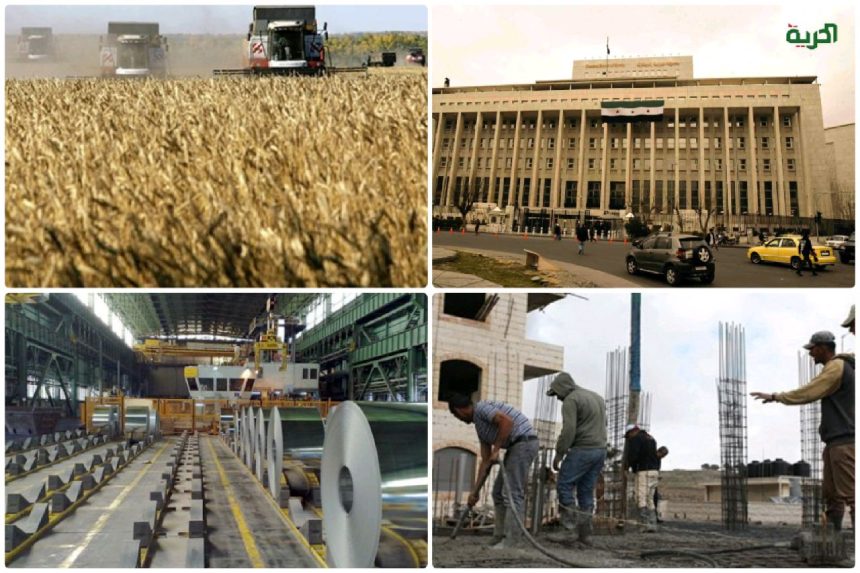
Further illustrating the government's commitment to reform, full tax exemptions were strategically introduced in the agricultural and healthcare sectors. These exemptions are part of a broader package of reform efforts intended to bolster these vital sectors, ensuring their stability and potential for growth within the new economic paradigm. Beyond these specific sectors, substantial tax reductions were also implemented across other industries, aiming to reduce the financial burden on businesses and encourage investment and expansion. Additionally, recognizing the importance of efficient financial flows, tax and customs regulations were meticulously streamlined with the explicit and stated aim of improving liquidity within the economy. This streamlining was intended to simplify processes, reduce bureaucratic hurdles, and facilitate smoother commercial transactions. Complementing these measures, public institutions across the country began adopting lean budgeting practices to curb spending, reflecting a concerted effort to enhance fiscal responsibility and efficiency as part of the broader economic overhaul. These full measures collectively signify a concerted and multi-faceted effort by the government to fundamentally restructure the national economy, moving it towards a more market-driven framework.
Public Hardship Amidst Reforms
Despite the government's intentions, the implementation of market deregulation initiatives in Syria has had tangible and often difficult consequences for the general population. These initiatives regrettably resulted in significant subsidy cuts across essential sectors, most notably affecting electricity, bread, and fuel. Such policy shifts, while perhaps fiscally necessary in the long run, have undeniably contributed to a widening gap between the government's ambitious economic strategies and the immediate expectations and needs of the public. The removal of these vital safety nets has placed additional financial strain on households already struggling with economic instability.
Even with these challenges, public-sector salaries were raised at least twice, an attempt to provide some relief to employees. However, the impact of these raises has been largely eroded by the concurrent rise in living costs. The daily realities for many citizens remain harsh: many continue to live in damaged homes, bearing the scars of conflict. They also navigate streets that remain blocked by rubble, reflecting ongoing and widespread infrastructure issues that impede daily life and economic activity. Children in affected areas are frequently sent to overcrowded schools due to insufficient capacity, noting the strain on public services and the long-term impact on the younger generation. These persistent conditions show the difficulties faced by the population even as economic reforms are implemented, demonstrating that policy changes at the macro level often translate into complex and challenging daily realities at the micro level. The inadequate wages, when compared to soaring market prices, further exacerbate these difficulties, making it clear that the economic reforms, despite their stated goals, have yet to translate into improved living standards for a significant portion of the Syrian population. The daily realities for many Syrians thus show the profound impact of these changes on their living standards, creating a palpable sense of hardship.
Proposed Solutions for Transition
To effectively bridge the divide between economic policy and the enduring public hardship, a strategic framework built upon three core pillars is proposed. These pillars are: Communication and Engagement, Protecting Vulnerable Groups, and Gradual Implementation. Implementing these pillars is seen as essential for ensuring that the economic transition is not only successful in its objectives but also equitable and sustainable for all citizens.
A key aspect of this framework involves the funding for a safety net specifically aimed at these vulnerable groups. It is suggested that this funding could be judiciously sourced from fiscal surpluses generated during the economic transition. Such surpluses might arise, for example, from savings achieved by lifting commodity subsidies, redirecting these funds to more targeted support mechanisms. This approach ensures that the benefits of reform are shared, particularly with those most affected by the initial adjustments.
One specific and actionable measure suggested is providing households classified as vulnerable with targeted discounts on electricity bills. These discounts would be specifically tied to certain consumption limits, ensuring that support is directed efficiently and does not encourage excessive use. This mechanism offers a concrete way to alleviate a significant household expense for those most in need. To effectively manage the potentially disruptive impact of reforms, it is strongly advised that major policy shifts should be spaced out over time rather than introduced simultaneously. This gradual approach allows the economy and society to adapt more smoothly, mitigating sudden shocks. For instance, worker layoffs that might occur during the transition of state-owned enterprises to private management could be carefully staggered, preventing mass unemployment and its associated social and economic instability. To ensure a just transition for the workforce, investors involved in these transitions could be contractually required to provide full retraining programs for any workers displaced by the changes. This commitment would equip affected individuals with new skills, enabling them to re-enter the workforce in emerging sectors and ensuring that the economic transformation benefits, rather than disadvantages, the Syrian people.