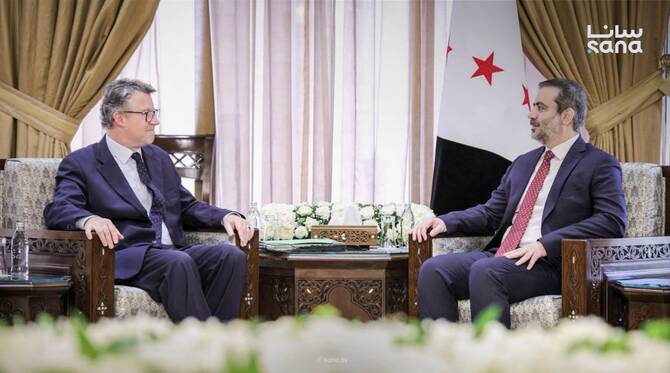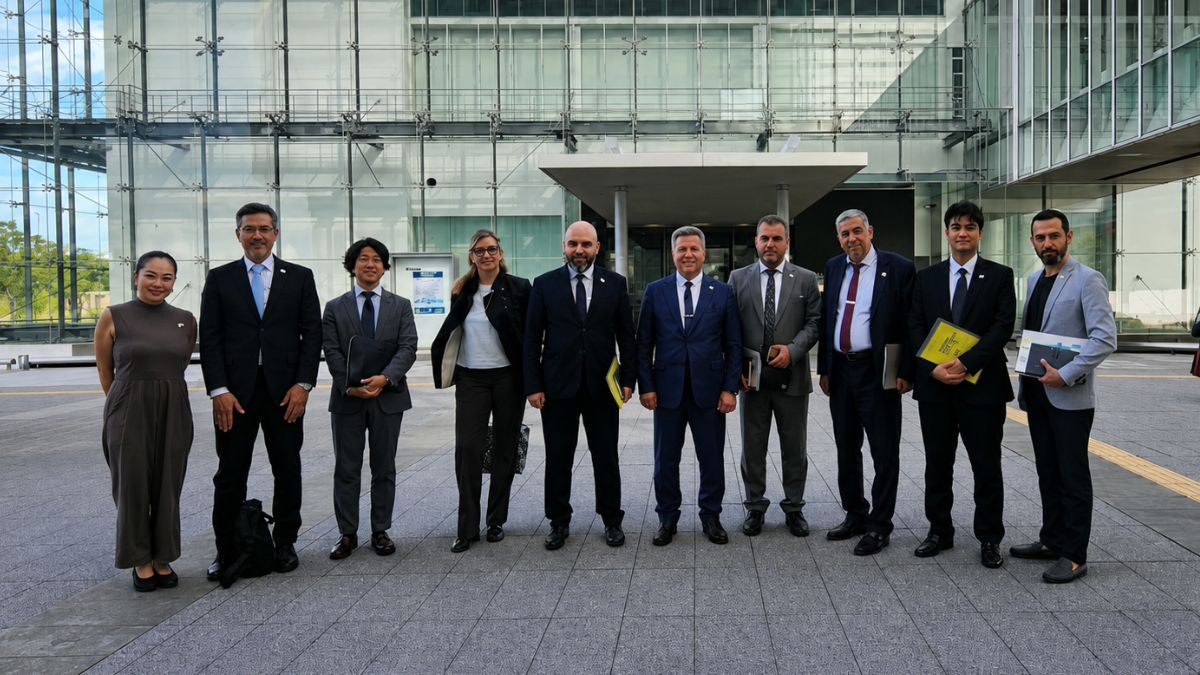
A Syrian government delegation made an official visit to Japan in July 2026 to study the reconstruction and recovery experiences of Kobe and Hiroshima. The delegation's visit offered an opportunity to examine Japan's expertise at close range, aiming to benefit from its models for post-conflict recovery. This engagement allowed the Syrian representatives to observe firsthand how Japan managed its extensive reconstruction efforts in cities like Kobe and Hiroshima.
Lessons from Japan's Post-War Success
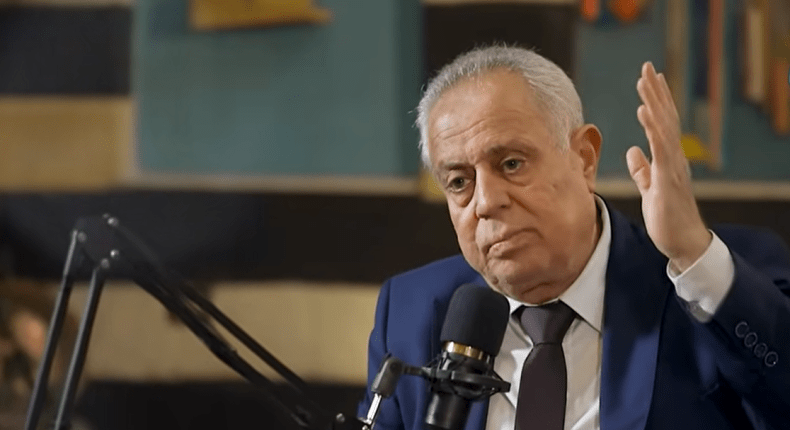
Professor Abdul Rahman Mohammed, a professor of finance and banking at the Faculty of Economics at Hama University, stated that Japan's post-World War II experience represents a significant example of reconstruction and development. Mohammed noted that despite the differences between Japan and Syria in historical circumstances, political environments, social structures, and available resources, the principles guiding Japan's recovery offer universal lessons. He identified three primary practical lessons from the Japanese model: prioritizing smart infrastructure, implementing a locomotive sectors policy, and fostering a three-way partnership involving government, the private sector, and financial institutions. These three key practical lessons from the Japanese experience – prioritizing smart infrastructure, the locomotive sectors policy, and building a three-way partnership involving government, the private sector, and financial institutions – were central to the delegation's study.
Japan's successful reconstruction was significantly aided by its readily available human capital, including engineers and technicians, and a strong institutional foundation. The country's reconstruction also benefited from a cohesive society and a collective spirit of sacrifice, according to Mohammed. This strong social cohesion and collective spirit of sacrifice were instrumental in mobilizing national efforts towards recovery. He stressed that the Japanese experience cannot be transferred literally to Syria but must be adapted to Syrian realities. "The real value of the Japanese experience does not lie in imitating Toyota factories or Shinkansen bullet trains," Mohammed explained, "Rather, it lies in understanding how a nation transformed military humiliation into economic strength through a system of values centered on knowledge, precision, and confidence in public institutions."
Mohammed acknowledged that Japan initiated reconstruction as an institutionally stable state with qualified human capital, while Syria faces the simultaneous challenge of rebuilding its economy, institutions, and social trust alongside its physical infrastructure. He concluded, "The Japanese experience also demonstrates that reconstruction is not simply a process of rebuilding what was destroyed. It is an integrated economic project based on creating effective institutions, developing human capital, encouraging investment, and directing resources and capabilities toward long-term projects."
Syria's Unique Reconstruction Hurdles
Syria faces significant challenges in its reconstruction efforts, including its diverse social and cultural landscape and the divisions created by the protracted conflict. The broad reach of the informal economy further complicates efforts, alongside the absence of an external entity to guarantee security and investment. The country also contends with the overlapping interests of several international actors, according to observers. These challenges, encompassing social and cultural diversity, conflict-induced divisions, the prevalence of the informal economy, the lack of external security and investment guarantees, and the complex interplay of international interests, present a formidable obstacle course for Syria's recovery.
Certain aspects of the Japanese model, studied by the Syrian delegation, would prove difficult to implement directly in Syria. The institutional framework of Japan's Ministry of International Trade and Industry, for instance, is not easily transferable due to Syria's weak institutional capacity and prevailing corruption. Japan's cohesive social foundation, which underpinned its post-war recovery, would necessitate genuine national reconciliation in Syria before it could be replicated. The establishment of a truly cohesive social foundation, mirroring Japan's experience, would require profound and genuine national reconciliation within Syria.
Syria's reconstruction challenge extends beyond physical rebuilding. The country faces the simultaneous task of rebuilding its economy, institutions, and social trust, in addition to its cities and infrastructure. This multi-faceted crisis presents a more complex scenario than the post-war recovery experienced by Japan, which began with a relatively stable institutional base.
Adapting the Japanese Blueprint
The Syrian delegation explored Japan's expertise across several critical areas, including urban planning, disaster management, and sustainable development. Their study also encompassed the specific legislation and projects instrumental in transforming Kobe and Hiroshima into global models for reconstruction and recovery. Elements of the Japanese experience that could prove useful in Syria, provided they are modified for local context, include the philosophy of 'monozukuri,' which emphasizes manufacturing craftsmanship. Other adaptable aspects include linking technical and vocational education directly to labor market needs and implementing carefully planned decentralization strategies. These elements, such as the 'monozukuri' philosophy, the alignment of technical and vocational education with labor market demands, and strategic decentralization, offer potential pathways for Syria's reconstruction if tailored to its unique environment.
Professor Abdul Rahman Mohammed, from Hama University's Faculty of Economics, emphasized that a direct transfer of the Japanese model is not feasible. Mohammed stated, "The Japanese experience cannot be transferred literally to Syria. Instead, the Japanese model must be broken down and reassembled in a way that suits Syrian realities." This approach suggests that while the underlying principles and successful methodologies observed in Japan are valuable, their application in Syria would require significant adaptation to account for the country's unique post-conflict environment and societal structures. The visit aimed to extract transferable lessons rather than replicate specific Japanese solutions wholesale.
Publication Date: July 21, 2026